Why 2026 Is the Perfect Year to Upgrade Your Smart Home
If you have been waiting for the \”right time\” to dive into home automation, 2026 is undeniably that moment. We have moved past the era of clunky gadgets that refuse to talk to each other and frustrating setups that require an IT degree. This year marks a significant turning point where smart home technology has finally matured into a seamless, intuitive experience that genuinely works for you, rather than giving you more work to do.
The biggest game-changer is the universal adoption of Matter. This connectivity standard has leveled the playing field, ensuring that devices from different brands—whether it’s a smart lock, a thermostat, or a light bulb—communicate flawlessly without complex workarounds. You no longer have to choose between \”Team Apple\” or \”Team Google\”; in 2026, everything just connects.
Beyond compatibility, we are seeing a shift toward predictive AI. Your home isn\’t just remote-controlled anymore; it’s learning. Instead of you constantly telling your house what to do, your system anticipates your needs based on your habits. It knows to lower the blinds before the afternoon sun heats up the living room and automatically adjusts the lighting when you start a movie.
Here is why upgrading now makes sense:
- Affordability: Advanced tech that used to cost thousands is now available in budget-friendly starter kits.
- Energy Savings: With rising utility costs, 2026-era devices are smarter about efficiency, often paying for themselves within a year.
- Privacy First: New standards prioritize local processing, meaning more of your data stays in your home, not on a cloud server.
At Lalulu, we believe technology should be invisible—it should support your life without demanding your attention. The solutions available this year are finally delivering on that promise.
Security & Peace of Mind
When we talk about upgrading your living space, safety is usually priority number one. In 2026, security isn\’t about building a fortress; it\’s about intelligent awareness. The best smart home devices 2026 has to offer focus on proactive protection that doesn\’t feel intrusive. Here are four essential upgrades to secure your perimeter and interior.
AI-Powered Video Doorbells with Package Detection
Old video doorbells just sent you a generic motion alert every time a car drove by. The new standard is AI-powered home automation that knows exactly what it\’s looking at. These devices can distinguish between a stray cat, a neighbor, and a delivery driver. The real game-changer here is specific package detection—getting an instant notification the second a box hits your porch is critical for preventing theft in the era of daily deliveries.
Hands-Free Smart Locks with Auto-Lock and Guest Codes
Fumbling for keys while holding groceries is a thing of the past. Modern smart locks utilize geofencing to recognize your phone and unlock the door as you approach. I rely heavily on the auto-lock feature, which secures the deadbolt automatically after the door closes. Plus, creating temporary guest codes for dog walkers or contractors means you never have to hide a spare key under the mat again.
mmWave Presence Sensors for Invisible Security Monitoring
This is the tech that is truly defining smart home automation 2026. Unlike standard motion sensors that \”go blind\” if you sit still on the couch, mmWave sensors detect micro-movements, like breathing. This allows for invisible security monitoring that knows exactly when a room is occupied without needing invasive cameras inside your private living spaces. It’s perfect for triggering alarms if presence is detected when the house should be empty.
Floodlight Cameras with Local Storage and No Subscriptions
Security shouldn\’t come with a monthly rent payment. We are seeing a massive shift toward smart home security systems 2026 that prioritize privacy and ownership.
- Local Storage: Footage records directly to a secure hub or SD card, not a cloud server.
- No Monthly Fees: You buy the hardware once, and it works forever.
- Active Deterrence: Motion-activated floodlights scare off intruders before they get close to the entry points.
Energy Efficiency & Sustainability
In 2026, a smart home isn\’t just about convenience; it\’s about running a tighter ship financially and environmentally. Energy costs aren\’t going down, so using automation to cut waste is one of the smartest investments you can make. Here are four sustainable smart home technology ideas that pay for themselves.
Learning Thermostats with Geofencing and Satellite Sensors
The days of programming a rigid schedule are over. Modern learning thermostats use geofencing to know exactly when you leave and when you\’re heading back. If the house is empty, the HVAC system dials back automatically to save energy.
We recommend pairing your main unit with satellite sensors in key rooms—like the bedroom or home office. This ensures the system prioritizes the temperature where you actually are, rather than heating an empty hallway. It’s a simple shift that can shave significant percentages off your monthly bill without sacrificing comfort.
Smart Plugs That Schedule High-Energy Appliances
\”Vampire power\” is real. Devices left in standby mode quietly drain electricity 24/7. Smart plugs are the easiest fix for this. By connecting high-energy appliances like space heaters, dehumidifiers, or even your coffee maker to a smart plug, you gain total control.
You can set schedules so these devices only draw power during off-peak hours when rates are lower, or ensure they cut off completely when you leave for work. It’s a low-cost upgrade that provides immediate visibility into your energy consumption.
Weather-Responsive Smart Irrigation Systems
Watering the lawn while it\’s raining is the definition of waste. A weather-responsive smart irrigation controller connects to local meteorological data to adjust your watering schedule in real-time.
If rain is in the forecast, the system skips a cycle. If it’s been particularly hot and dry, it adds a little extra soak time. This predictive AI smart home feature ensures your landscape gets exactly what it needs—no more, no less—saving thousands of gallons of water annually.
Automated Blinds That Optimize Natural Light and Heat
Your windows are massive energy leaks. In the summer, they let in heat; in the winter, they let it out. Automated blinds act as a dynamic shield for your home’s climate.
You can program these blinds to close automatically during the hottest part of the day to reduce the load on your air conditioner. Conversely, in the winter, they can open when the sun hits the glass to harvest free solar heat. By syncing your blinds with your thermostat, you create an integrated ecosystem that passively manages your home\’s temperature.
Daily Convenience & Automation
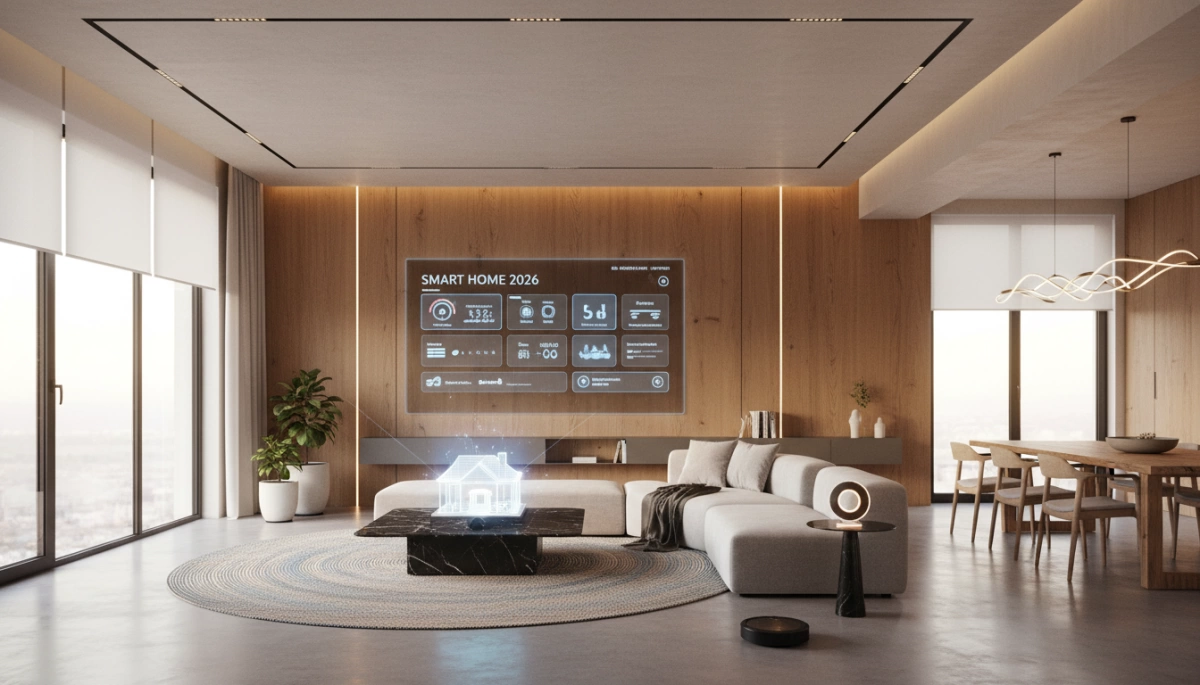
Real smart home automation in 2026 isn\’t about showing off gadgets; it\’s about removing friction from your day. We want technology that works in the background so you can focus on living. Here are five ways to streamline your daily grind using the latest tech.
Voice-Activated Morning Routines
Stop waking up to a jarring alarm clock. By setting up voice controlled home routines, your house wakes up with you. A simple \”Good Morning\” command to your assistant triggers a cascade of actions: blackout shades roll up to let in natural light, the thermostat warms the bathroom, and the connected coffee maker starts brewing. It sets a calm tone for the day before your feet even hit the floor.
Robot Vacuums with Room-Specific Mapping
Forget the dumb bumpers of the past. Modern robot vacuum automation utilizes advanced LiDAR to create a precise map of your floor plan. You don\’t need to clean the whole house every time.
- Targeted Cleaning: Send the vacuum to \”clean under the kitchen table\” immediately after dinner.
- Virtual No-Go Zones: Easily block off pet bowls or cable-heavy corners in the app without using ugly magnetic strips on the floor.
NFC Tags for One-Tap Scenes
Sometimes you don\’t want to talk to a speaker, especially if a partner is sleeping. NFC tags are inexpensive stickers you can place anywhere. Stick one on your nightstand; tap your phone against it to trigger your \”Goodnight\” scene—locking doors, arming the security system, and turning off all lights instantly. It is the ultimate low-cost hack for smart home automation 2026.
Smart Buttons for Instant Control
Apps are great, but physical buttons are faster. Place a wireless smart button on your coffee table or by the entryway.
- Movie Night: One press dims the lights to 10%, closes the blinds, and turns on the TV.
- Guest Mode: Give guests a simple button to control the guest room lights without needing your Wi-Fi password or a complex app.
Leak Detectors with Automatic Shut-Off
This is the most valuable \”boring\” automation you will own. Place smart leak sensors near washing machines, water heaters, and under sinks. If a sensor detects moisture, it doesn\’t just send a notification—it communicates with a smart shut-off valve on your main water line to cut the water supply immediately. This setup prevents catastrophic water damage while you are at work or on vacation.
Health & Wellness
We often think of smart homes as just convenience or security, but in 2026, the biggest shift is toward using wellness focused smart home gadgets to actually make us feel better. Your home environment directly impacts your physical and mental health, and automation can quietly optimize that background for you.
Here are four ways to turn your house into a health-first sanctuary:
Circadian Rhythm Smart Lighting for Better Sleep
Lighting isn\’t just about seeing in the dark; it’s about signaling your brain. Smart lighting automation ideas have evolved beyond simple dimmers. I use bulbs that automatically adjust their color temperature throughout the day—cool, energizing white in the morning to wake you up, shifting to warm amber in the evening to help produce melatonin. It happens subtly, but you’ll notice you fall asleep faster and feel less groggy.
Indoor Air-Quality Monitors with Auto-Purifier Triggers
You can’t manage what you don’t measure. Standalone air purifiers are great, but they are reactive only if you turn them on. I recommend pairing a dedicated air quality monitor with a smart plug or a smart purifier. If the monitor detects a spike in VOCs from cooking or high pollen counts, it automatically kicks the purifier into high gear until the air is clean again. It’s predictive AI smart home features at their finest—solving problems before you even sneeze.
Gentle Wake-Up Lights Integrated with Sleep Tracking
Jumping out of bed to a blaring alarm is the worst way to start a day. A better approach is a \”sunrise\” simulation. These lights gradually brighten over 30 minutes before your actual alarm time. By integrating this with sleep tracking (via a smartwatch or mattress sensor), the system can ensure the light sequence starts when you are in a lighter sleep cycle, making waking up feel natural rather than forced.
Hands-Free Bathroom Night Lights with Motion Sensing
Navigating the house at 2 AM shouldn\’t involve blinding yourself with the main overhead lights. Simple motion sensors placed at ankle height in the hallway and bathroom can trigger soft, dim LED strips. This provides just enough visibility for safety without disrupting your night vision or waking up your partner. It’s a small, affordable upgrade that makes a massive difference in your nightly comfort.
Entertainment & Lifestyle Enhancements
Your home should be more than just efficient; it should be fun. In 2026, smart home entertainment isn\’t just about bigger screens—it\’s about creating an atmosphere. We are seeing a massive shift toward integrated ecosystems where your lights, sound, and visuals work together seamlessly. Here are three ideas to elevate your downtime.
Immersive Lighting Sync with TVs and Music
If you are still watching movies in the dark, you are missing out. Modern smart lighting systems can now sync directly with your TV or music stream in real-time, expanding the action beyond the screen.
- How it works: LED light strips behind your TV or smart bulbs in the room mimic the colors on your screen. An explosion in an action movie flashes orange and red across your walls, while a deep ocean scene bathes the room in blue.
- The Upgrade: Look for systems that support Matter for faster response times. The goal is zero lag so the lights match the beat of your music or the frame of your movie instantly.
Smart Displays as Central Family Command Centers
Forget about sticking paper notes on the fridge. A dedicated smart display in the kitchen or living room acts as the brain of your household.
- Functionality: Use it to view your security camera feeds, check the family calendar, follow recipes, or control every device in the house from a single dashboard.
- Family Connection: It’s perfect for leaving digital sticky notes for your spouse or kids, or making quick video calls to grandparents without needing to hold a phone. It keeps everyone organized and connected without the clutter.
Multi-Room Audio Systems with Spatial Sound and Voice Control
Music shouldn\’t be trapped in one room. A true multi-room audio setup allows you to move from the kitchen to the patio without missing a beat.
- Spatial Sound: The latest speakers offer spatial audio, which makes it feel like the sound is coming from all around you, not just a single box.
- Voice Integration: \”Hey [Assistant], play jazz everywhere.\” It’s that simple. You can group speakers for a whole-house party or play a podcast in the office while the kids listen to Disney hits in the playroom. High-quality, Wi-Fi-connected speakers are essential here for uncompressed audio quality that Bluetooth just can\’t match.
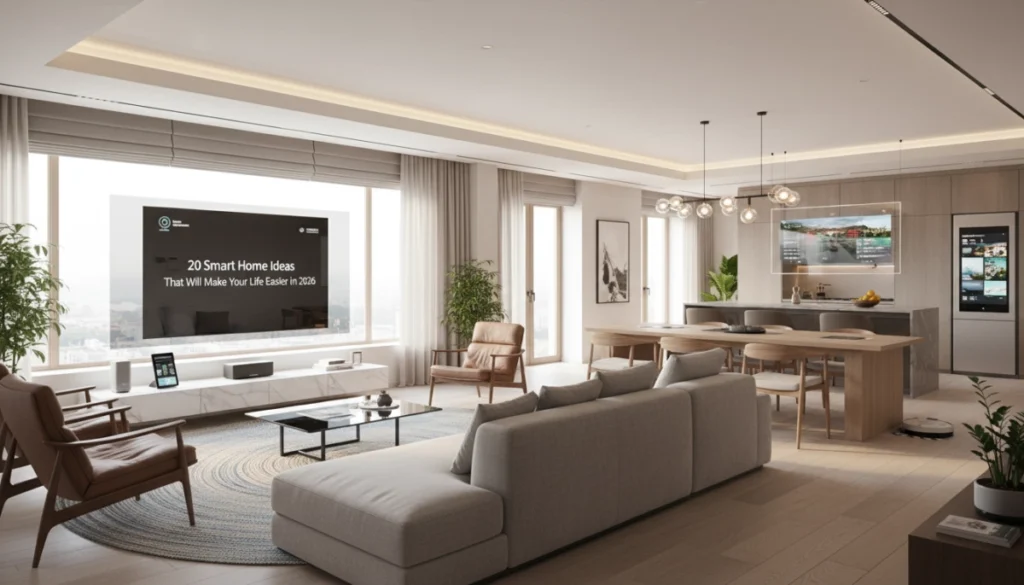
Getting Started With 20 Smart Home Ideas That Will Make Your Life Easier in 2026
If you want to bring these smart home ideas to life, trying to do everything at once will just leave you frustrated. I always tell people to take a practical, phased approach. Here is exactly how to build your smart home automation 2026 setup without the stress.
Home Automation for Beginners
Follow this straightforward roadmap to get your house online:
- Assess your daily needs: Look at your routine. Are you trying to cut utility bills, or do you just want the doors to lock themselves? Fix your biggest annoyances first.
- Insist on the Matter standard: Only buy a Matter compatible smart home device. This guarantees your gear will communicate seamlessly, whether you prefer Apple, Amazon, or Google.
- Start small: Pick just 3 to 5 of the ideas we\’ve covered. Master those before expanding.
To make this process completely foolproof, I highly recommend managing your setup through Lalulu. We built Lalulu specifically to offer effortless integration and reliable, ongoing support for United States homeowners. We take the guesswork out of pairing devices so you can enjoy a fully integrated smart home ecosystem straight out of the box.
Smart Home Budget Tiers
You do not need to drain your bank account to get started. Here is what you can expect to spend based on your goals:
| Setup Level | Estimated Cost | What You Get |
|---|---|---|
| Starter | ~$200 | A solid foundation (e.g., a central |
FAQ: Smart Home Questions Answered
Navigating the world of home automation can feel overwhelming, especially with how fast technology moves. Here are the straight answers to the most common questions we get about building a smart home in 2026.
Which smart home platform is best in 2026?
The \”best\” platform really depends on what phone you carry in your pocket. However, thanks to Matter compatibility, the lines are blurring.
- Apple HomeKit: The gold standard for iPhone users who prioritize privacy and slick integration.
- Google Home: Excellent if you rely heavily on Google Assistant for voice commands and search queries.
- Amazon Alexa: Still the king of compatibility with the widest range of budget-friendly devices.
- Home Assistant: The top choice for tech enthusiasts who want total control without cloud reliance.
How much can I save on energy bills?
Realistically, a well-optimized smart home can shave 10% to 15% off your annual energy costs. The biggest savings come from:
- Smart Thermostats: They stop heating or cooling an empty house.
- Automated Blinds: They block the summer sun to reduce AC load.
- Smart Plugs: They kill \”vampire power\” from devices left on standby.
While gadgets cost money upfront, the reduction in waste usually pays for the devices within two years.
Do I need a hub?
In 2026, the answer is increasingly \”No, but it helps.\”
- Wi-Fi Devices: Connect directly to your router. No hub needed.
- Thread/Matter Devices: Often require a \”Border Router,\” but you likely already own one (like a newer Apple TV, HomePod, or Nest Hub).
- Dedicated Hubs: Still useful if you are running a massive system with 50+ devices and want to keep traffic off your main Wi-Fi network.
Are these ideas renter-friendly?
Absolutely. Most modern smart home gear is designed to be non-invasive.
- Smart Locks: Many retrofit over your existing deadbolt latch on the inside, leaving the outside keyhole unchanged.
- Lighting: Smart bulbs and plugs require zero wiring.
- Sensors: Most stick to walls with removable adhesive strips (like Command strips) that don\’t damage paint.
Always save the original \”dumb\” devices to reinstall when you move out so you can take your smart gear with you.
Will smart devices slow down my Wi-Fi?
If you add 40 devices directly to an old router, yes. To prevent this:
- Use a Mesh Wi-Fi System: This handles high device counts much better than a single router.
- Choose Thread or Zigbee devices: These create their own separate mesh network and don\’t clog up your Wi-Fi bandwidth like standard Wi-Fi bulbs do.