Booking and Planning Travel Hacks for 2026
You don’t have time to obsess over flight charts and mysterious “algorithms.” You just want to know: when should I book, what days are cheapest, and which travel hacks actually save money in 2026? Let’s keep this tight and practical.
Optimal Booking Windows for Cheap Flights
For most US travelers, these cheap flight booking strategies work well:
- Domestic flights:
- Sweet spot: 21–60 days before departure
- Peak holidays (Thanksgiving, Christmas, July 4): 2–4 months ahead
- International flights:
- Sweet spot: 2–6 months before departure
- Summer Europe / big events: 4–8 months ahead
Rule of thumb:
- If the price is 20–30% lower than what you usually see for that route, book it.
- Prices usually spike inside 14 days for non‑budget airlines.
Cheapest Days to Fly and Book in 2026
In 2026, patterns are similar to recent years:
-
Cheapest days to fly (on average):
- Tuesdays, Wednesdays, Saturdays
-
Most expensive days:
- Fridays and Sundays (especially evenings)
-
Cheapest days to book flights:
- Historically: Sunday and early in the week often show better fares
- Late-night or very early morning searches can sometimes surface lower fares, but time of day matters less than flexibility.
Hack: Search a full month view to see which dates drop $50–$150 below your target.
Using Flexible Dates and Fare Alerts
Flexible dates are one of the biggest pro traveler secrets:
- Use “Flexible dates” or “±3 days” search on Google Flights, Skyscanner, or Hopper.
- Set fare alerts for:
- Your ideal dates
- A backup window (e.g., week before and after)
Smart setup:
- Track 2–3 nearby airports (e.g., JFK/EWR/LGA or SFO/OAK/SJC).
- When prices drop by 15–20%, your alert pings you, and you just click and book.
At lalulu, we always start with flexible date tools before even thinking about hotels.
Incognito Mode, VPN and Cookie Tricks
Prices don’t always change just because of cookies, but you should still protect yourself:
- Always:
- Search in incognito / private mode
- Clear cookies or use a different browser for your final booking
- VPN tricks:
- Try searching from your home country and sometimes from the airline’s home country
- Check if prices differ in USD vs local currency
Red flag: If you see prices jumping after repeated searches, switch browser, use a VPN, or use your phone data instead of Wi‑Fi.
Loyalty Programs and Airline Miles Hacks
Even casual travelers in the US should grab the easy loyalty wins:
- Always add your frequent flyer number – even cheap economy flights earn miles.
- Focus on 1–2 main airline alliances (Star Alliance, Oneworld, SkyTeam) instead of scattering miles.
- Look for:
- Off‑peak award charts
- Mileage sales where buying miles + fees is cheaper than cash fares
- Partner redemptions (e.g., using one airline’s miles to fly a partner for less miles)
This is how I’ve turned two paid trips into a free domestic flight more than once.
Credit Card Rewards and Sign‑Up Bonuses
In the US, travel credit card rewards are where you get serious value:
- Look for cards with:
- Large sign‑up bonuses (60k–100k points after minimum spend)
- No foreign transaction fees
- Travel protections (trip delay, lost luggage, rental car coverage)
- Use one main travel rewards card for:
- Flights, hotels, gas, groceries, dining
- Large planned expenses to hit sign‑up bonus goals
Important:
- Pay the full balance every month.
- Otherwise, interest will wipe out your “free” flights.
Finding Error Fares and Flash Deals
Error fares and flash deals are real, but you have to move fast:
- Use deal sites / newsletters that track flight deals hacks
- Follow airlines and deal accounts on X (Twitter) and email lists
- Be ready to:
- Book first, think later (within 24‑hour free cancellation window if available)
- Depart from different US cities if a repositioning flight is cheap
If you see NYC–Europe for under $300 roundtrip or US–Asia under $500–$600, that’s usually a “don’t overthink it” deal.
Hidden City Ticketing: When to Use It (and When Not To)
Hidden city ticketing = booking a flight with a connection and getting off at the layover instead of flying to the final destination.
Use only if:
- You have carry‑on only (checked bags go to final destination).
- It’s a one‑way ticket.
- You’re okay with potential loyalty account risk (airlines discourage this).
Avoid if:
- You’re using the airline’s status or miles you really care about.
- You might need rebooking (weather or delays could reroute you).
- You don’t fully understand the hidden city ticketing risks.
I treat this as a last‑resort hack, not an everyday strategy.
Building a Flexible but Realistic Trip Plan
The best smart travel planning combines flexibility with structure:
- Lock in early:
- Flights on the cheapest flexible dates
- First 1–2 nights’ accommodation
- Keep flexible:
- Activities that can be moved between days
- One “buffer” day after long‑haul flights for jet lag recovery
- Leave room for:
- Weather changes
- Local tips from hosts, drivers, or fellow travelers
Simple planning checklist:
- Must‑do (non‑negotiable experiences)
- Nice‑to‑do (optional, flexible)
- Absolutely skip (overpriced tourist traps)
At lalulu, we always build in 10–20% of the trip as “unscheduled time” so you don’t feel rushed or locked into a rigid script.
Dial in these booking and planning travel hacks, and everything else on your trip gets easier: cheaper flights, less stress, and more room in your budget for the fun stuff you actually care about.
Packing travel hacks for carry on only
Why carry on only saves money and stress
Going carry-on only is one of my favorite travel hacks for 2026:
- Save money: No checked bag fees, no “oversize” surprises.
- Save time: Skip check-in counters and baggage claim. Walk off the plane and go.
- Less risk: No lost luggage drama, no delayed bags, fewer “what if” headaches.
- More control: Your stuff stays with you on tight connections and international flights.
If I can’t comfortably lift it overhead and walk 10–15 minutes with it, it’s too much.
Capsule wardrobe for travel (simple and smart)
I build a small capsule wardrobe for travel that all works together:
- Pick one color base: black, navy, or gray.
- Add 2–3 tops, 2 bottoms, 1 light layer, 1 warmer layer.
- Choose 1–2 pairs of shoes max (walkers + 1 “nicer” pair).
- Every top should match every bottom. No “single use” outfits.
Aim for 7–10 pieces total you can mix into 10–14 outfits.
Packing cubes vs compression bags
Both are solid carry on packing hacks, but I use them differently:
- Packing cubes
- Best for organization and quick access
- Great for short trips or people who unpack in drawers
- Compression bags (zip or roll, not vacuum)
- Best for bulky stuff: hoodies, puffers, jeans
- Great for long trips or winter travel
I usually do 1–2 cubes + 1 compression bag and keep one cube just for underwear/socks.
Rolling vs folding clothes efficiently
I mix both to save space and avoid wrinkles:
- Roll: t‑shirts, leggings, workout clothes, pajamas
- Fold flat: button-downs, dress shirts, blazers
- Bundle heavier pieces at the bottom, lighter on top
- Use packing cubes so rolled clothes don’t explode everywhere in your carry-on.
Multi-use clothing and gear to cut bulk
To travel lighter, I try to pack multi-use gear:
- Scarf / wrap: blanket, pillow, cover-up
- Lightweight black joggers: plane pants, daywear, sleep pants
- Merino wool t-shirt: can be worn multiple times without smelling
- Packable rain shell: windbreaker + rain jacket + top layer
If an item can’t be used at least 3 ways, it usually doesn’t go.
Smart toiletry hacks and 3-1-1 rules
TSA’s 3-1-1 rule (for carry-ons in the U.S.):
- Liquids, gels, creams 3.4 oz (100 ml) or less per item
- All must fit inside 1 quart-size clear plastic bag
- 1 bag per traveler
To make it painless:
- Buy travel-size refillable bottles and label them
- Keep a pre-packed 3-1-1 bag in your suitcase year-round
- Use solid toiletries where you can to free up liquid space
Solid toiletries and minis for flights
Solid products are one of the best carry on packing hacks:
- Solid shampoo + conditioner bars
- Bar soap instead of body wash
- Solid deodorant, solid perfume, solid lotion bar
- Tooth powder or small toothpaste tablets
Then add minis for what must be liquid: contacts solution, facial products, meds, etc.
Electronics packing and cable management
U.S. travelers carry a ton of tech, so I keep it tight and minimal:
- Use a small tech pouch for:
- 1 universal charger or dual-port wall block
- 1–2 short charging cables (USB‑C + Lightning if needed)
- Small power bank (airline-compliant)
- Earbuds / headphones
- Bundle and secure cables with Velcro ties or rubber bands
- Keep laptops/tablets easy to pull out for security (unless you have TSA PreCheck).
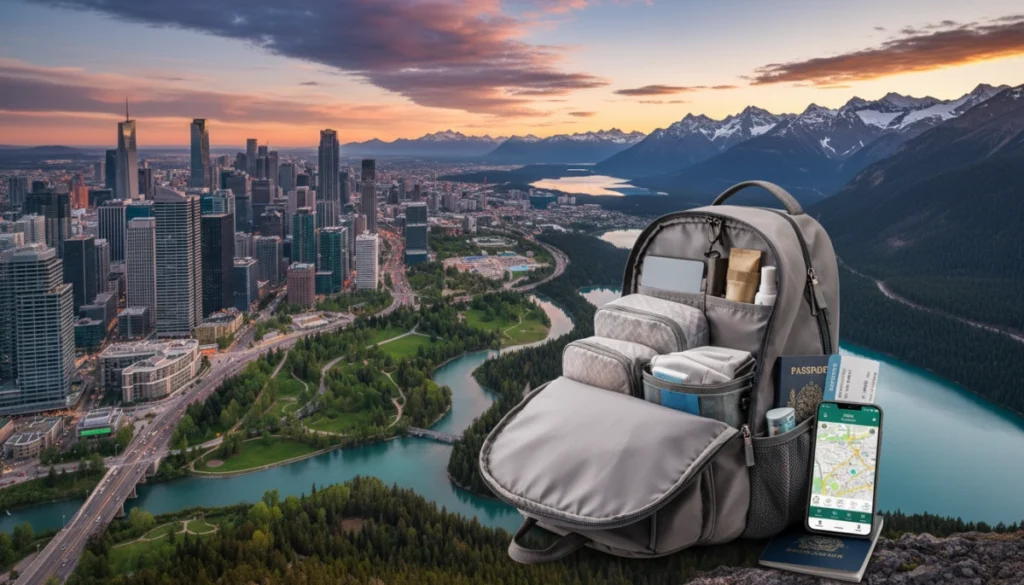
Last-minute essentials in your personal item
Your personal item (backpack or tote) is your safety net if your carry-on gets gate-checked:
Always keep these with you under the seat:
- Passport / ID / wallet / travel credit card
- Phone + charger + power bank
- Medications (at least a few extra days)
- One change of clothes + underwear
- Lightweight layer / hoodie + socks
- Snacks + empty water bottle
- Essential toiletries (toothbrush, face wipes, travel-size deodorant, lip balm)
If this bag is dialed in, you’re covered even if everything else gets delayed.
Airport travel hacks to skip the chaos
I treat the airport like a system you can game. These are the best travel tips 2026 I actually use to avoid stress, lines, and surprise costs.
Timing your arrival at the airport
For most US travelers, this timing works:
- Domestic flights:
- No checked bag + TSA PreCheck: 75–90 minutes before
- Checked bag or no PreCheck: 2 hours before
- International flights:
- PreCheck/Global Entry: 2–2.5 hours before
- No programs: 3 hours before
- Avoid peak times when you can: Mon–Thu early morning, Sun night are usually busiest.
- Use apps like MiFlight or the airport’s own app to check current security wait times before you leave home.
Security line shortcuts that actually work
Skip gimmicks, focus on what moves:
- Use the “Not Ready” vs “Ready” trick:
- Avoid families with strollers, big groups, and people repacking at the front.
- Pick lanes with business travelers and frequent flyers.
- Empty your pockets into your bag before you get in line, not at the bin.
- Wear slip-on shoes and avoid heavy jewelry, belts with metal, and chunky boots.
- Put laptop + liquids in an easy-access section of your personal item.
TSA PreCheck, Global Entry and similar programs
If you fly out of US airports even twice a year, I think these are mandatory:
- TSA PreCheck
- Keep shoes, belt, and light jacket on
- Laptop and liquids stay in your bag
- Lines are usually much shorter
- Cost: about $78 for 5 years
- Global Entry vs TSA PreCheck
- Global Entry includes TSA PreCheck + fast immigration back into the US
- Cost: about $100 for 5 years
- Worth it if you do even one international trip per year
- Many travel credit card rewards (Chase Sapphire, Amex, Capital One, etc.) reimburse the fee every 4–5 years.
Smart ID, documents and boarding pass tricks
I don’t let documents slow me down:
- Keep ID, passport, and cards in one slim, front-pocket wallet or neck pouch.
- Use mobile boarding passes in your digital wallet (Apple Wallet, Google Wallet) + one screenshot as backup.
- For families, keep everyone’s passes in one phone wallet so you’re not searching five devices at the gate.
- Check that your ID matches your ticket name exactly before you leave home.
Food and water hacks before your flight
Airport food is where budgets die:
- Bring an empty reusable water bottle and fill it after security at a fountain or hydration station.
- Pack simple snacks: nuts, granola bars, jerky, fruit, protein bars. Saves a ton vs airport prices.
- If you want a real meal, grab something on the way to the airport (chipotle, salads, sandwiches) and bring it through.
- Avoid super salty fast food before a long flight—makes bloat and jet lag worse.
Using airport lounges and day passes
Lounge access is one of the most underrated money saving travel tricks:
- Check if your credit card includes Priority Pass, Capital One Lounge, or airline lounge access.
- No card? Many lounges sell day passes around $35–$60—often cheaper than buying separate food + drinks in the terminal.
- Lounges usually give:
- Wi‑Fi, outlets, quieter seating
- Snacks or full food, coffee, sometimes alcohol
- Cleaner bathrooms, sometimes showers (key for long haul flight hacks)
How to handle delays, cancellations, and rebooking
When things go wrong, speed matters:
- The second you see a delay, do three things at once:
- Get in line at the gate desk
- Open the airline app and look for self-service rebooking
- Call the airline phone line
- Use flight tracker apps like FlightAware or the airline’s app for early warning on delays or aircraft changes.
- Know your rights:
- In the US, if the airline causes a cancellation or long delay, push politely for meal vouchers, hotel, or rebooking.
- In the EU or on EU carriers, compensation rules (EU261) can apply—look it up before you fly.
- Always keep one backup flight option in mind you can ask to be moved to.
Protecting yourself from lost or delayed luggage
I design my setup assuming luggage can go missing:
- Use carry-on only when possible; if you must check a bag:
- Put a luggage GPS tracker (AirTag, Tile) in your checked bag.
- Add a big, unique tag or strap so it’s easy to spot on the belt.
- Take a photo of the bag before you check it.
- Keep these in your personal item, never in checked luggage:
- Passport, wallet, keys
- Medications and glasses
- One change of clothes + underwear
- Basic toiletries (3-1-1 sized)
- If a bag is delayed, file a report before leaving the airport and keep all receipts—many airlines reimburse essentials.
These airport security shortcuts and pro traveler secrets take a little setup once and then pay off every single trip.
In Flight Travel Hacks for Comfort and Sleep

Best Seats for Comfort and Sleep
I always treat seat selection as a cheap upgrade. For long-haul and international flights, I do this:
- Red-eye or long flight:
- Window seat = best for sleep (no one climbing over you, wall to lean on).
- Avoid last row (limited recline, near bathrooms).
- Tall or broad shoulders:
- Exit rows or bulkhead for more legroom, but check if the armrests are fixed.
- Light sleeper:
- Stay away from galleys and bathrooms (noise, lights, foot traffic).
- Nervous flyer or families:
- Closer to the front = smoother ride + faster off the plane.
Use SeatGuru or your airline’s seat map and check reviews before you lock it in.
Cheap Upgrade Strategies That Actually Work
You don’t need to pay full business class prices to get better comfort:
- Bid for upgrades when airlines email upgrade offers before check-in.
- Ask at the desk if there are paid upgrades or extra legroom seats left; prices are often lower day-of.
- Use miles or points for premium economy instead of a risky business-class splurge.
- Book off-peak flights (midweek, middle of the day) for emptier cabins and a better shot at an empty middle seat.
I focus on small upgrades (extra legroom, premium economy) instead of chasing business class every time.
DIY Pillows, Blankets and Comfort Setups
I build my own “mini business class” using simple travel essentials:
- Neck pillow:
- Use a compressible or inflatable pillow; wear it front-facing to stop your head from bobbing.
- Blanket hack:
- Pack a thin travel blanket or large scarf; airplane blankets can be scratchy and inconsistent.
- Lumbar support:
- Roll up a hoodie and put it behind your lower back. Game changer on long flights.
- Footrest:
- Use a foot sling or rest your feet on your backpack to reduce leg pressure.
Keep your comfort kit in your personal item, not in the overhead bin.
Hydration, Snacks and Avoiding Bloat
Airplane cabins are insanely dry, so I keep it simple:
- Hydrate smart:
- Drink 8–16 oz of water before boarding.
- Bring an empty water bottle and fill it after security.
- Skip or limit alcohol and soda; they dehydrate and cause bloat.
- Snack strategy:
- Pack high-protein, low-salt snacks: nuts, protein bars, jerky, cut fruit.
- Go light on salty chips and heavy meals right before flying.
- Beat bloat:
- Avoid carbonated drinks, gum, and tight waistbands.
- Walk the aisle every couple of hours.
I treat flights like a hydration day, not a cheat day.
Simple Jet Lag Routines That Work
These jet lag remedies are basic but effective:
- Before the flight:
- Start shifting your sleep by 1–2 hours toward your destination time zone.
- On the plane:
- Switch your phone and watch to destination time as soon as you board.
- If landing in the morning, sleep on the plane; if landing at night, try to stay awake.
- At destination:
- Get sunlight within the first few hours of arrival.
- Short nap only if you must: 20–30 minutes max.
I follow one rule: act like you’re already on local time as early as possible.
Screen Time, Blue Light and Sleep Masks
If I want real sleep on a flight, I treat it like bedtime:
- Limit screens 60–90 minutes before you want to sleep.
- Turn on “night mode”/blue light filter on your phone and tablet.
- Use a good sleep mask to block cabin lights (airline masks are usually junk).
- Earplugs or noise-canceling headphones help more than most people realize.
The combo of a sleep mask + earplugs + neck pillow is the cheapest “business class” setup you can build.
Stretching and Movement During the Flight
Staying still the whole time is what really wrecks your body:
- Every 60–90 minutes:
- Stand up, walk the aisle once or twice.
- In your seat:
- Ankle circles, toe raises, gentle knee lifts.
- Shoulder rolls and neck stretches.
- Clothing:
- Wear loose, stretchy clothes and comfortable socks or compression socks on long-haul flights.
This isn’t just comfort—it’s basic travel health and circulation.
Hygiene, Wipes and Staying Healthy on Board
I run a simple routine to keep flights more hygienic and stress free:
- Before settling in:
- Use disinfectant wipes on the tray table, armrests, seatbelt buckle, and screen.
- Hand hygiene:
- Pack travel-size hand sanitizer and use it before eating.
- Face and freshness kit:
- Travel toothbrush + mini toothpaste
- Facial wipes or micellar wipe
- Lip balm and travel moisturizer (cabin air is dry)
- Mask optional, but smart:
- For long-haul or winter flights, I often wear a mask to avoid catching something right before or during a trip.
All of this fits in a small zip bag in my personal item so I don’t have to dig through my carry-on mid-flight.
On the ground travel hacks at your destination
Airport arrival and immigration shortcuts
Once you land, I move fast so I’m not stuck in lines for an hour. Here’s what actually helps in 2026:
- Sit toward the front of the plane if you can, so you hit immigration early.
- Use Mobile Passport Control (MPC app) for many U.S. airports to speed up reentry.
- Have forms ready: pen in your bag, hotel address and return flight info handy.
- Carry-on only when possible so you can skip baggage claim and head straight out.
Local transport apps and passes
Smart travel planning starts with how you move around:
- Download local transit apps (Citymapper, Transit, Moovit, local city apps).
- Look for day/weekly passes instead of single rides – usually cheaper for tourists.
- In many U.S. and international cities, contactless credit cards tap right into buses and subways.
Public transit vs rideshare
I treat it like this:
- Use public transit for: downtown trips, airport trains, rush-hour gridlock, and tight budgets.
- Use rideshare/taxis for: late nights, areas with weak transit, heavy luggage, or when safety feels off.
- If you’re solo, public transit wins on money saving travel tricks; for 3–4 people, rideshare can be cheaper than multiple fares.
Finding cheap eats and local food spots
To avoid tourist trap menus:
- Walk 2–3 blocks away from main attractions. Prices usually drop fast.
- Check Google Maps reviews, filter by “cheap” or “budget-friendly.”
- Ask front desk staff, baristas, or Uber drivers where they actually eat.
- Hit food trucks, local markets, and hole-in-the-wall diners instead of chain restaurants.
Saving on coffee, water and groceries
Daily habits add up:
- Grab breakfast basics and snacks from a grocery store, not the hotel café.
- Refill a collapsible water bottle at airports, hotels, and public fountains.
- In the U.S., check Target, Walmart, Costco, Trader Joe’s near your hotel for cheap food and drinks.
- Make coffee in-room when you can; if not, look for local spots with loyalty punch cards or apps.
Smart accommodation choices and upgrades
I treat hotels and stays like a mini strategy game:
- Book refundable rates, then re-check prices weekly and rebook if it drops.
- Join the free loyalty program for every major hotel brand; that’s where upgrades, late checkout, and Wi‑Fi perks live.
- Ask nicely at check-in if any complimentary upgrades or better rooms are available – and mention if you’re celebrating something real.
House sitting, hostels and points stays
For big savings and better experiences:
- House sitting (TrustedHousesitters, etc.) = free stays in exchange for pet/house care. Time-flexible travelers win big here.
- Hostels with private rooms give you hotel-level comfort at lower prices plus built-in community.
- Use hotel points and free night certificates from travel credit card rewards for expensive cities and weekend getaways.
Safety basics, scams and red flags
Travel safety tips abroad matter more than most people admit:
- Keep passport, cards, and cash split: some on you, some in your room safe.
- Be wary of:
- “Friendship bracelets,” “free gifts,” or forced help with bags/ATM.
- Taxis that “don’t use the meter” or “meter is broken.”
- Overfriendly strangers pushing tours, jewelry, or bars.
- Use ATMs inside banks, not random street machines.
Offline maps, eSIMs and staying connected
Staying online makes everything easier:
- Download offline maps in Google Maps or Maps.me for every city you visit.
- Use eSIMs (Airalo, Holafly, local carriers) so you land with data ready to go.
- Keep digital backups of passport, ID, and cards in secure cloud storage.
Cultural immersion without feeling awkward
You don’t need to be fluent or fake it:
- Learn 5–10 key phrases (hello, please, thank you, excuse me, sorry).
- Follow how locals act: tipping, noise level, lines, and dress codes.
- Take free walking tours and small-group classes (cooking, street food, art) to get real context fast.
Avoiding tourist traps while still seeing highlights
You can still see the big-name spots without getting ripped off:
- Visit main attractions early morning or late afternoon to dodge peak crowds and prices.
- Pair “must-see” sights with nearby neighborhoods where locals actually hang out.
- Skip overpriced “view” restaurants; go for the free viewpoint or cheap rooftop instead.
These on-the-ground travel hacks keep your trip stress-free, help you dodge tourist traps, and stretch your budget without feeling like you’re on a strict budget trip.
Money saving travel hacks and budgeting
Build a realistic trip budget (that actually works)
I always start with a simple budget, then work backward:
- Break it into buckets: flights, stay, local transport, food, activities, buffer.
- Daily cap: set a daily spend target (ex: $80/day for food + activities).
- Overestimate the boring stuff: airport transfers, tips, city taxes, luggage fees.
- Lock in big costs early: flight + stay first, then flex the rest.
Use a basic travel budget planner (Sheets/Notion app) so you see the damage in real time.
Using travel credit cards the smart way
Travel credit cards are powerful if you treat them like a debit card:
- Go for no foreign transaction fee cards (Chase Sapphire, Capital One Venture, etc.).
- Time big purchases to hit sign‑up bonuses (flights, hotels, annual bills).
- Always pay in full each month—interest kills any travel rewards.
- Stack: airline/hotel loyalty programs + travel rewards cards for double points.
Never open a card just for a trip if you can’t manage it long term.
No fee ATMs and avoiding bad exchange rates
ATMs usually beat airport currency kiosks, but only if you use them right:
- Use banks that refund ATM fees (Schwab, some credit unions).
- Avoid sketchy standalone ATMs—stick to machines attached to real banks.
- Withdraw fewer, larger amounts to cut down on fees.
- Always decline conversion at the ATM (that’s where they overcharge you).
Currency conversion apps & dynamic pricing traps
Dynamic currency conversion is one of the biggest money traps abroad:
- If a card machine asks: “Pay in USD or local currency?” — always pick local.
- Use apps like XE, Wise, Revolut to check live rates before you pay.
- Screenshot the rate so you can spot a bad exchange or hidden markup.
Booking activities and tours for less
Don’t pre-book everything through the most obvious site:
- Compare direct booking vs platforms (GetYourGuide, Viator, Klook).
- Check local operators’ websites—same tour, lower price.
- Avoid add‑ons you don’t need: hotel pickup, “VIP groups,” photos.
- Look for small group or off‑peak tours—often cheaper and better.
Free walking tours, passes, and bundles
In most big cities, you can cut activity costs in half:
- Join free walking tours (tip-based) to get oriented day one.
- Check city passes (CityPASS, Go City, local cards) if you’ll hit multiple sights.
- Use bundle tickets (museums + transit + attractions) where it actually fits your schedule.
Always do quick math: if you won’t use at least 3–4 items, skip the pass.
Daily money habits that save more than you think
Little moves add up fast when you travel:
- Breakfast smart: hotel breakfast can be $20+; grocery store snacks + coffee = ~$5.
- Carry a refillable water bottle to avoid airport and tourist‑area markups.
- Eat one “nice” meal per day, keep the others simple/local.
- Avoid buying single‑use extras: umbrellas, chargers, tourist traps near landmarks.
Tracking expenses on the road without stress
I track spending in under 5 minutes a day:
- Use apps like Trail Wallet, TravelSpend, or Splitwise (for groups).
- Log once a day (before bed) instead of every purchase.
- Group stuff: “food,” “transport,” “fun” instead of itemizing everything.
- Set alerts on your travel cards so you see charges instantly.
These money saving travel hacks keep trips affordable without making you feel like you’re on a strict budget.
Tech and Gear Travel Hacks
Must‑have travel apps for 2026
For U.S. travelers, these apps are non‑negotiable travel essentials in 2026:
- Flight trackers: Flighty, FlightAware, airline apps (AA, Delta, United)
- Maps & offline navigation: Google Maps offline, Maps.me
- Local transport apps: Citymapper, Transit, local metro/bus apps
- Money & budgeting: Wise, Revolut, Trail Wallet, Splitwise
- Lodging & activities: Airbnb, Booking, GetYourGuide, Viator
- Safety: SmartTraveler (U.S. State Dept), WhatsApp for quick contact
Download, log in, and enable notifications before you leave home.
Flight trackers and delay alerts
To avoid surprises at the airport, I always:
- Track flights in Flighty/FlightAware + airline app
- Turn on push alerts for delays, gate changes, and cancellations
- Add flights to my calendar so times auto‑update
- Screenshot key info (confirmation number, record locator) in case apps lag
When there’s a delay, I’m usually notified before the gate agent announces it.
Digital wallets and mobile boarding passes
I treat my phone as my primary travel wallet, but I always keep backups:
- Add boarding passes to Apple Wallet / Google Wallet
- Save PDF copies of tickets and confirmations in Files/Drive
- Screenshot boarding passes in case the app or Wi‑Fi fails
- Store passport photo, ID, and credit card backs in a secure notes app or password manager
If the scanner is down or your screen won’t load, you still have options.
Luggage trackers and smart tags
Lost luggage tips start with knowing where your bag actually is:
- Drop an AirTag (iPhone) or Tile/Chipolo (Android‑friendly) in every checked bag
- Label the outside with a phone number + email, not your full address
- Use a sturdy tag with a covered window to hide your info from casual eyes
When airlines say, “We’re not sure where it is,” I can see it sitting in another city.
Universal adapters, power strips, and chargers
Charging chaos is one of the easiest problems to fix:
- 1 universal adapter that covers US/EU/UK/AU plugs
- 1 compact power strip (with at least 3 outlets + 2–3 USB ports)
- 1 fast charger (at least 30–65W) that can handle phone + tablet + laptop
- Cables: USB‑C, Lightning (if needed), USB‑A to whatever older devices you still use
I prefer one high‑power brick + multiple ports over carrying several slow chargers.
Minimalist tech kit for light travel
Carry-on packing hacks start with trimming tech:
- Phone + noise‑canceling earbuds
- Small power bank (10,000–20,000 mAh, TSA‑friendly)
- Universal adapter + compact power strip
- Luggage tracker for each checked bag
- 2–3 short cables + 1 longer backup cable
If it doesn’t earn its spot daily, it stays home.
Backpack and suitcase features that matter
I design and choose bags that make security and airport lines painless:
- Backpack:
- Dedicated padded laptop sleeve (lay‑flat for TSA)
- Quick‑access top pocket for passport, wallet, AirPods
- Luggage pass‑through sleeve to sit on your roller
- Suitcase:
- Spinner wheels (4 wheels) and a solid telescoping handle
- Expandable but still fits U.S. overhead bins
- No built‑in battery (add your own power bank instead)
Function beats branding every time when you’re sprinting to a gate.
Small accessories that solve big travel problems
These tiny items punch way above their weight:
- Cable organizer so cords don’t knot up in your bag
- Phone stand or cheap clip for watching movies on planes
- Flat travel power strip for hotel rooms with terrible outlets
- Compact surge protector for protecting your laptop abroad
- SIM/eSIM tool or paper clip for swapping SIMs on the go
With a tight, minimalist tech kit and the right travel apps, you save time, cut stress, and unlock real pro traveler secrets without overpacking gear.
Travel hacks for different trip types
Solo travel hacks for safety and confidence
I travel solo a lot, and my rules are simple and strict:
- Share your live location with 1–2 people back home (Find My, Google Maps).
- Stay near busy areas, especially at night; skip “too cheap” stays in sketchy locations.
- Fake it till you make it: walk with purpose, earbuds in but off, phone away.
- Keep two wallets: a small “decoy” with a little cash and one card, and your real one hidden.
- Join free walking tours day one to get your bearings and meet people.
These solo travel hacks give you freedom without killing your safety.
Couples travel hacks to avoid arguments
Travel stress can wreck a good trip fast. Here’s how I keep it calm:
- Divide roles: one handles flights and logistics, the other handles food and activities.
- Agree on one non‑negotiable each per trip (a museum, a hike, a beach day).
- Use splitwise or a shared note to track money instead of arguing about who paid what.
- Build in alone time: separate coffee runs, solo walks, or a workout.
If you plan for small breaks and clear roles, most money and “what do you want to do?” fights disappear.
Family travel hacks with kids or teens
For U.S. families, the best travel hacks are about energy and expectations:
- Book around nap/sleep windows when you can; early morning flights beat late nights.
- Each kid/teen gets a personal backpack: snacks, headphones, hoodie, one toy/book.
- Pre‑download movies, games, and playlists on every device before you leave home.
- Always pack a small “meltdown kit”: snacks, meds, wipes, change of clothes.
- For teens, give a daily budget and a little freedom (like a 1–2 hour solo wander with check‑ins).
Less chaos = fewer arguments and way more actual memories.
Work and business trip efficiency tips
On business trips, I treat my time like billable hours:
- Always carry‑on only so delays don’t cost you meetings.
- Use a dedicated work travel kit: chargers, dongles, noise‑canceling headphones, hotspot.
- Book hotels near your first morning meeting, not the airport.
- Batch “deep work” on the plane and in lounges; handle emails during Uber and transit time.
- Keep one standard packing list for all work trips so you never overthink it.
These business travel hacks keep you looking sharp and actually rested when you land.
Weekend getaway vs long trip strategies
I plan 2‑day and 2‑week trips totally differently:
Weekend getaway travel hacks:
- Fly with just a personal item; no time to wait for baggage.
- Stay central, even if it costs a bit more; you’ll save time and transport money.
- Pre‑book 1–2 key activities and leave the rest open.
Long trip travel hacks:
- Choose slower, cheaper transit (trains, buses) to cut costs.
- Book stays with laundry, so you can pack less.
- Build rest days where you do almost nothing; this keeps you from burning out.
International vs domestic travel differences
International travel hacks for U.S. travelers look a bit different than domestic ones:
- Always check passport expiration (most countries want 6+ months remaining).
- Turn off data roaming and use an eSIM or local SIM to avoid insane phone bills.
- Carry a no foreign transaction fee credit card and say NO to dynamic currency conversion on card machines.
- Know basic local scams (fake taxis, “helpful” ATM people, overpriced tours near major sites).
- For domestic trips, lean harder on TSA PreCheck / CLEAR, road trips, and low‑cost carriers; no passport, less red tape.
Dialing in these travel hacks by trip type makes every flight, road trip, and long‑haul feel way less stressful and way more worth the money.
Post trip travel hacks and habits
When I get home, I treat the end of the trip like part of the trip. These travel hacks keep things simple and set me up for the next flight deal.
Unpacking and laundry shortcuts
- Drop your bags by the washer and unpack straight into laundry baskets:
- Dirty: clothes, socks, underwear
- Rewear: jeans, jackets
- Clean: unused items back to the closet
- Keep a “travel-only” toiletry bag stocked so you never fully unpack it.
- Store packing cubes pre‑loaded with basics (sleepwear, extra chargers) so your next carry on is half packed already.
Sorting photos and videos without overwhelm
- As soon as you’re on Wi‑Fi, back up everything to Google Photos, iCloud, or Amazon Photos.
- Same day you get back, do a 15–20 minute sweep:
- Delete obvious junk: duplicates, screenshots, blurry shots
- Favorite the top 20–50 photos for easy sharing
- Make one shared album per trip. That’s your simple, stress‑free system.
Travel journaling and memory keeping
- Keep it super light:
- Write 5 bullet points: best meal, best view, funniest moment, biggest hassle, what you’d repeat.
- Add 3–5 photos to a digital journal (Notion, Google Doc, or a notes app).
- Toss small keepsakes (tickets, wristbands) into a “travel box” instead of full scrapbooks.
Reviewing what you spent and what worked
- Open your travel credit card app and scan charges by country or date:
- Note total spent, big outliers, and where you got value.
- Ask yourself:
- Which cheap travel activities felt worth it?
- What did you overpay for (taxis, tourist traps, tours)?
- Jot quick notes in a travel budget planner doc so you adjust next time.
Reusing your packing list for the next trip
- Right after unpacking, open your packing list:
- Highlight what you never used → remove next time.
- Add what you missed (e.g., extra outlet, solid toiletries, snacks).
- Save it as “Weekend trip packing list,” “International flight tips list,” etc., so you can duplicate and tweak, not start from scratch.
Rolling points, miles and credits into future travel
- Within a week of getting home, log into your loyalty programs:
- Confirm your airline miles, hotel points, and travel rewards cards bonuses posted.
- Check for travel credits (annual credits, airline fee credits, Uber/LYFT credits) and note expiry dates.
- Set deal alerts (Google Flights, flight tracker apps, loyalty program emails) for the next destination while your points and status are fresh.
- Keep a simple “Points & Miles” note with: program, balances, and expiration so you can pounce on cheap flight booking strategies and money saving travel tricks without digging through accounts.