

Why Travelers Keep Making the Same Travel Mistakes
Let me be blunt: most travel mistakes don’t come from bad luck—they come from habits. I’ve made many of these myself, and I see travelers repeat the same common travel mistakes every year, even when they “know better.”
Root causes of common travel mistakes
Most travel mistakes to avoid come from a few simple triggers:
- Excitement: You’re so hyped about the trip that you skim details, rush bookings, and say “it’ll be fine” a little too often.
- Assumptions: You assume “it works like back home” for money, safety, visas, tipping, and transport. It doesn’t.
- Outdated info: You rely on old blog posts, random social media tips, or pre-2020 guides and miss new rules, digital entry forms, or 2026 airport changes.
- Overconfidence: You’ve traveled before, so you stop double-checking things like layovers, insurance, or passport validity.
How small planning errors become big headaches
Most travel planning mistakes start tiny:
- Booking a tight 40-minute connection “to save time” → missed flight, new ticket costs, lost luggage drama.
- Not checking passport or visa rules → denied boarding or expensive last-minute changes.
- Ignoring local seasons → closed attractions, canceled ferries, or miserable heat waves.
These small errors usually turn into:
- Money stress: Change fees, last-minute hotels, emergency taxis, overpriced airport meals.
- Time loss: Hours spent at customer service desks instead of actually enjoying your trip.
- Mental burnout: Panic, arguments with travel partners, and the feeling your trip is “ruined.”
Why fixing these travel mistakes changes every future trip
The good news: once you spot your patterns, you can stop repeating the biggest travel mistakes:
- You create simple checklists and reminders so you don’t forget essentials.
- You learn which details matter (passport, visas, layovers, insurance) and which don’t.
- You build a “travel system” that saves you money, time, and stress every single trip.
Fixing these travel mistakes beginners make isn’t about being perfect; it’s about being prepared. When you tighten up your planning process just a bit, everything feels smoother: fewer surprises, more control, and way more energy left for the fun parts of travel.
Planning and Preparation Travel Mistakes to Avoid
When I look at the biggest travel mistakes beginners make, most of them start before you ever get on a plane. Fixing these common travel planning mistakes will save you money, stress, and vacation days.
Overplanning Your Itinerary
One of the most common travel mistakes to avoid is trying to cram in everything.
- Leave at least one free block every day (morning or afternoon)
- Plan 1–2 main activities per day, not 5
- Add buffer time for traffic, lines, and getting lost
If your itinerary looks like a military operation, it’s a red flag.
Not Researching Local Customs and Seasons
Skipping basic research on local customs, laws, seasons, and “hidden rules” is a classic travel planning mistake.
Before you book:
- Check weather and seasons (rainy season, extreme heat, hurricane season)
- Look up local laws and dress codes (especially for religious sites)
- Search “[destination] scams and tourist traps” on recent forums and Reddit
- Confirm if tipping is standard or not
This takes 20–30 minutes and prevents a lot of awkward or risky moments.
Travel Insurance Mistakes
Skipping coverage or buying the wrong policy is one of the biggest travel mistakes I see from U.S. travelers.
- At minimum, get trip cancellation, trip interruption, and medical coverage
- For international trips, make sure it includes emergency medical and evacuation
- Double-check if your credit card already includes any travel insurance
Read what’s excluded (pre-existing conditions, adventure sports, etc.) so you’re not surprised.
Passport, Visa, and Entry Rule Errors
These passport and visa mistakes can literally stop your trip at the gate.
- Your passport usually needs 6 months validity beyond your return date
- Check if you need a visa or e-visa and apply early
- Some countries require online entry forms, proof of funds, or return tickets
- Confirm any vaccination requirements (like Yellow Fever in some regions)
Always verify on the official government or embassy site, not just random blogs.
Zero Flexibility in Flights and Hotels
Locking yourself into non-changeable, non-refundable bookings is a risky travel planning mistake.
- When possible, book refundable or flexible rates for flights and hotels
- Avoid super tight schedules on days with work or important events
- Build in a buffer day if you’re flying for weddings, cruises, or tours
You’re paying for flexibility so one delay doesn’t wreck your entire trip.
Ignoring Time Zones and Connection Times
A lot of airport travel mistakes come from not paying attention to time.
- Confirm if times are shown in local or departure time zones
- Avoid connections under 1.5–2 hours for domestic, 2.5–3 hours for international
- Watch for red-eye flights and how they affect your first day’s energy
Use your phone’s calendar in local time to spot weird timing gaps or overnight layovers.
Not Sharing Your Itinerary
A simple safety and logistics mistake: keeping all your plans to yourself.
- Share your flight details, hotel, and basic itinerary with a trusted person
- Store copies of your passport, insurance, and key bookings in a shared folder (Google Drive, Dropbox)
- Add an emergency contact in your phone and on luggage tags
If something goes wrong, you want someone at home who can help fast.
Fixing these common travel mistakes in the planning phase will make your trip smoother, cheaper, and a lot less stressful.
Packing and Luggage Travel Mistakes to Avoid
Packing is where a lot of common travel mistakes start. A few bad choices here can cost you money, time, and comfort for your whole trip.
Overpacking and Baggage Limit Problems
One of the biggest packing mistakes when traveling is trying to bring your whole closet.
- Check airline baggage limits and weight rules before you pack
- Aim for carry-on only for short trips when possible
- Stick to a simple rule: 1 week of outfits max, even for longer trips (you can do laundry)
- Weigh your suitcase at home to avoid overweight baggage fees
Uncomfortable Shoes and Outfits
A lot of travel mistakes beginners make come down to bad clothing choices.
- Don’t pack brand‑new shoes you haven’t broken in
- Choose comfortable walking shoes over “Instagram” outfits
- Pack clothes that mix and match and work in layers
- Prioritize breathable, quick-dry fabrics for real travel days
Forgetting Travel Essentials
For U.S. travelers, forgetting basics is one of the most annoying luggage mistakes on trips.
Make a simple checklist that always includes:
- Prescription meds + basic pain relief and allergy meds
- Chargers, cables, and a power bank
- Universal adapter (if traveling internationally)
- Travel-size toiletries in a clear, quart-size bag for TSA
Prohibited Items and Airport Security Delays
Avoid airport travel mistakes that slow you down at security:
- Know the TSA 3-1-1 liquids rule (3.4 oz / 100 ml, all in one clear quart-size bag)
- Skip big liquids, full-size aerosols, and sharp objects in carry-ons
- Check your airline and TSA list for prohibited items before you pack
Not Using Packing Cubes or Checklists
Simple tools fix a lot of travel planning mistakes around packing.
- Use packing cubes or organizers to keep clothes and gear sorted
- Keep a reusable packing checklist in Notes or Google Docs
- Save different versions: weekend trip, business trip, international trip
Ignoring Carry-On and Personal Item Rules
U.S. airlines all have slightly different carry-on size rules, and that’s where many travel mistakes to avoid come from.
- Check your airline’s carry-on and personal item dimensions
- Make sure backpacks and totes actually fit under the seat
- If you’re flying basic economy, confirm whether carry-on is even allowed
Skipping a Daypack or Personal Bag
Not bringing a small bag for daily use is a quiet but common travel mistake.
- Pack a lightweight daypack or crossbody bag for exploring
- Keep wallet, phone, passport, water, sunscreen, and snacks in it
- Use it as your personal item on the plane to save space
Dialing in your packing routine once saves you from repeat travel mistakes every single trip. Keep it light, keep it organized, and stick to a checklist.
Money, Budget, and Currency Travel Mistakes
Common money mistakes while traveling
When it comes to travel mistakes to avoid, money mistakes are the ones that ruin trips fastest. Here’s where most people slip up and how I handle it.
1. Not telling your bank you’re traveling abroad
US banks still flag “suspicious” foreign charges.
- Always set a travel notice in your banking app before you leave.
- Add two cards (primary + backup) from different issuers if you can.
- Turn on transaction alerts so you catch fraud fast.
2. Relying on airport currency exchange
Airport counters are one of the biggest budget travel mistakes.
- Skip the kiosk unless it’s a true emergency.
- Use ATMs in the city with a debit card that has low or no foreign transaction fees.
- If you must exchange cash, compare rates, not just “no fee” signs.
3. Only cards or only cash with no backup
Traveling with just one payment type is risky.
- Aim for a mix:
- 1–2 credit cards (for hotels, flights, security)
- Some local cash (small notes for tips, street food, markets)
- Keep a separate emergency stash in your bag or money belt.
4. Underestimating daily travel costs
Hidden travel costs add up: transport, tips, data, snacks, small entry fees.
- Build a daily budget that includes:
- Local transport (metro, Uber, taxis)
- SIM card / eSIM / data
- Tips and service charges
- Small attractions and snacks
- Add a 10–20% buffer so you’re not stressed every day.
5. Tourist traps and overpriced restaurants
One of the most common travel mistakes beginners make is eating only in tourist zones.
- Avoid places with:
- Aggressive hosts pulling you in
- Menus with no prices
- “Tourist menu” boards in five languages
- Check Google Maps, Yelp, or local blogs; look for spots with strong local reviews, not just influencers.
6. Dynamic currency conversion (DCC)
This one quietly kills your budget.
- At card machines and in shops, always choose to pay in the local currency, not USD.
- If the screen offers “convert to dollars now,” say no. Your bank usually gives a better rate.
7. Not tracking your spending
You don’t feel it day to day, then realize you blew half your budget in three days.
- Use a simple notes app, spreadsheet, or a travel budget app to log:
- Lodging
- Food
- Transport
- Activities
- Check totals every night so you can adjust before it’s too late.
If you avoid these common travel mistakes with money, you’ll protect your budget, cut stress, and have more cash left for the things you actually care about on the trip.
On-the-Road Travel Mistakes and Safety Slip-Ups
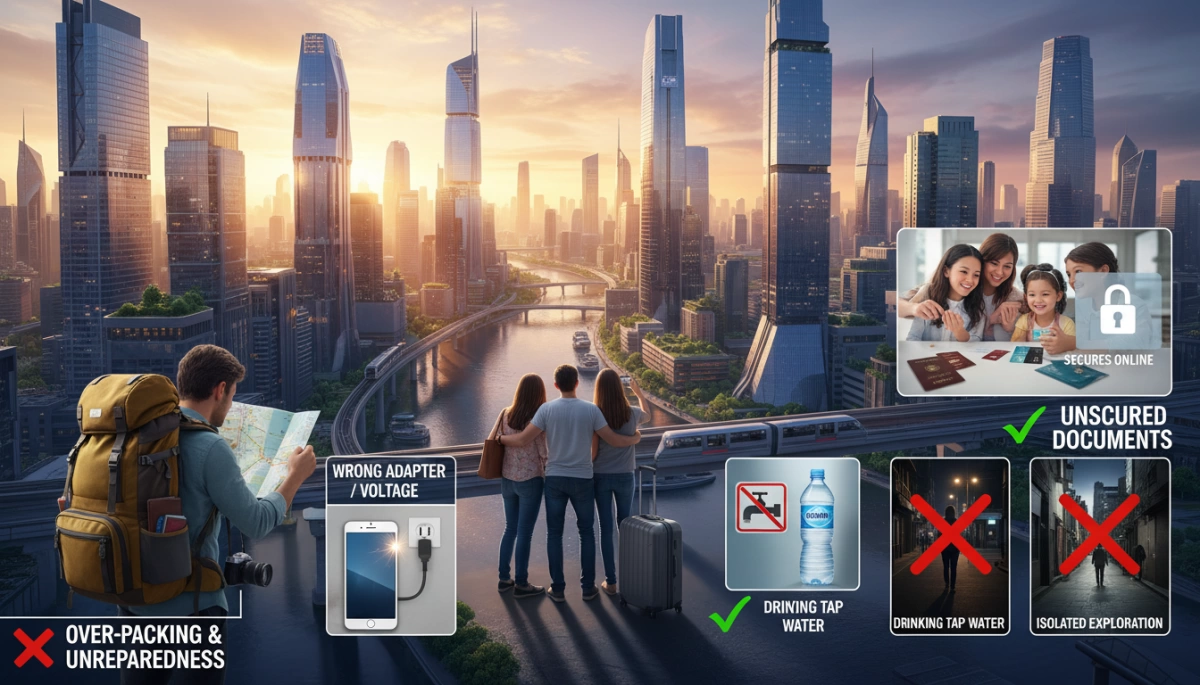
When I talk to customers, most of the biggest travel mistakes don’t happen at the airport – they happen on the ground. Here’s where people get burned and how I avoid it.
Trusting Every Taxi, Tour, or “Deal”
One of the most common travel mistakes to avoid is jumping on the first offer you see.
- Always check Google Maps ratings, TripAdvisor, or Yelp before booking taxis, tours, or excursions.
- Use official taxi stands, app-based rides (where available), or hotel-recommended drivers.
- Be wary of anyone who approaches you first with a “special deal,” especially around airports and major attractions.
Carrying Everything in One Place
Carrying all your money and documents together is a classic safety mistake when traveling.
- Split your cash, cards, and passport into different spots: money belt, hotel safe, daily wallet.
- Keep a photo of your passport and key cards stored securely in the cloud.
- Use a crossbody or anti-theft bag in crowded areas.
Ignoring Local Etiquette and Culture
Cultural mistakes abroad can make you a target and ruin your experience.
- Look up dress codes, tipping norms, and basic behavior rules before you go.
- In more conservative areas, avoid loud behavior, public drinking, or flashy outfits.
- When in doubt, copy what locals do – not what other tourists are doing.
Staying Only in Tourist Areas
Sticking to the main strip is one of the biggest common travel mistakes.
- Tourist zones are where you’ll find higher prices, more scams, and weaker food.
- Ask locals, hotel staff, or hosts for neighborhood spots and safe side streets to explore.
- Join a reputable walking or food tour to get comfortable going beyond the main drag.
Forgetting Hydration, Food, and Sun Protection
Your body pays for these travel planning mistakes fast, especially for US travelers not used to heat or long walking days.
- Carry a refillable water bottle, light snacks, and basic meds.
- Use sunscreen, a hat, and sunglasses, even on “mild” days.
- Eat real meals, not just coffee and pastries, to keep your energy up.
Missing Transport Because You Didn’t Check Schedules
This is a classic airport travel mistake that kills budgets and time.
- Double-check train, bus, and ferry schedules the day before you travel.
- Plan to arrive early for flights and long-distance trains, not right on time.
- Use apps like Google Maps, airline apps, and local transit apps with alerts turned on.
Walking Around Distracted With Your Phone Out
This is one of the easiest travel mistakes beginners make and one of the riskiest.
- Keep your phone in a front pocket or crossbody bag, not your back pocket.
- Step aside to check maps or messages, don’t walk and scroll in crowds.
- In busy areas, hold your phone with two hands and be aware of scooters and bikes.
Staying smart on the road isn’t about being paranoid; it’s about avoiding obvious travel mistakes that cost you time, money, and peace of mind.
Technology and Modern Travel Mistakes to Avoid
Tech should make trips easier, but a few common travel mistakes can do the opposite. Here’s how I handle the big ones.
Flight & Hotel Search Mistakes
One of the biggest travel planning mistakes now is booking without using tools that save you money.
Avoid these:
- Searching flights and hotels without incognito mode (prices can jump after repeat searches)
- Ignoring comparison tools like Google Flights, Skyscanner, or Hopper
- Booking the first “deal” you see instead of tracking prices for a few days
I always compare across a few sites, then book direct with the airline or hotel when possible for better support if something goes wrong.
Public Wi‑Fi and Security Slip‑Ups
Relying only on free public Wi‑Fi is one of the most dangerous technology travel pitfalls.
Skip these mistakes:
- Logging into banking, email, or work accounts on unsecured public Wi‑Fi
- Traveling without a VPN or at least a mobile hotspot backup
- Using random charging stations (risk of “juice jacking”)
I use a VPN, a U.S. carrier plan with roaming or eSIM, and avoid doing anything sensitive on open networks.
Offline Maps, Apps, and E‑Tickets
Traveling without offline tools is a classic beginner travel mistake that leads to stress when the signal drops.
Set these up before you leave:
- Download offline maps in Google Maps or Maps.me
- Install a translation app (Google Translate with offline language packs)
- Save e‑tickets, boarding passes, and hotel confirmations to your wallet app and as PDFs
I keep everything in one folder in my phone and a backup on email so I can pull it up fast.
Document Backup Mistakes
Not backing up key documents is a safety mistake when traveling that’s easy to fix.
Back these up to the cloud:
- Passport (photo page)
- Visa and any digital entry forms
- Travel insurance policy
- Flight and hotel bookings
I store them in a secure cloud folder (Google Drive, iCloud, Dropbox) plus send a copy to a trusted contact in the U.S.
Chargers, Power, and Adapter Problems
Simple packing mistakes when traveling can shut down your whole day if your phone dies.
Don’t forget:
- A high‑quality power bank (carry it in your personal item, not checked bag)
- Chargers for phone, watch, tablet, laptop
- The right plug adapters for your destination (and a small power strip if you travel with multiple devices)
I keep a dedicated travel tech pouch that never leaves my suitcase so I don’t have to rebuild it every trip.
Ignoring New 2026 Travel Rules
By 2026, airport travel mistakes and entry mistakes will hit more U.S. travelers who don’t read the fine print.
You need to:
- Check new airport security rules (electronics, liquids, biometric screening changes)
- Confirm visa and digital entry systems (like ETIAS for Europe and other e‑authorizations)
- Complete required online forms before you arrive at the airport
I always check the official airline email, TSA.gov, and the destination country’s government site a few weeks before I fly.
Relying Only on Social Media for Travel Advice
Trusting only TikTok, Instagram, or Facebook groups is one of the worst modern travel mistakes.
Balance your research:
- Use social media for ideas, not final decisions
- Confirm details with official tourism sites, government pages, and airline apps
- Check recent reviews on Google Maps, TripAdvisor, and Booking.com
I treat social media like inspiration, then verify everything with real‑world, up‑to‑date sources before I book.
If you fix these technology and modern travel mistakes, you cut a lot of hidden friction, save money, and keep your trip under your control instead of your phone’s.
Sustainable and Ethical Travel Mistakes to Avoid
Overtourism and peak-season hotspots
One of the biggest sustainable travel mistakes is only booking peak-season hotspots (think summer in Europe or cherry blossom season in Japan). That crush of tourism drives up prices, strains local resources, and honestly makes your trip less fun.
Do instead:
- Shift to shoulder season or weekdays when you can.
- Look for second‑tier cities and under-the-radar spots nearby.
- Limit “Instagram famous” stops to a few key moments, not your whole trip.
Single-use plastics and wasteful habits
Using single-use plastics all trip long adds up fast, especially on flights and in beach towns. Americans are used to convenience, but on the road it becomes a problem.
Easy fixes:
- Pack a reusable water bottle, coffee cup, and tote bag.
- Bring travel-size containers you refill instead of buying minis.
- Skip daily hotel laundry unless you really need it.
Unethical animal tourism and harmful experiences
Common travel mistakes beginners make: booking elephant rides, tiger selfies, dolphin shows, or any “performing” animal experience. If it feels sketchy, it probably is.
Red flags:
- Animals chained, forced to perform, or available for selfies on demand.
- Cheap “once-in-a-lifetime” animal encounters pushed on tourists.
Do instead: choose ethical wildlife tours, sanctuaries with third‑party certifications, and nature experiences where animals stay wild.
Only booking global chains and skipping local stays
Sticking only to global hotel chains is comfortable, but it sends most of your money out of the local community.
Smarter move:
- Mix it up: 1–2 nights at a chain for points, then local guesthouses, boutique hotels, or family-run stays.
- Eat at local restaurants and street food spots, not just the hotel bar or the nearest U.S. chain.
Disrespecting local communities and basic courtesy
Another common travel mistake is forgetting that real people live where you’re vacationing. In the U.S., we’re used to more space and noise tolerance; abroad, that can come off as rude.
Basics that matter:
- Keep noise down at night in residential areas and small hotels.
- Ask before taking photos of people or private property.
- Learn 2–3 local phrases (hello, please, thank you) and use them.
Ignoring low-impact transport options
Many travelers default to flights and taxis, even when lower-impact transport is easy and cheaper.
Better choices when you can:
- Trains or buses instead of short flights.
- Walking, biking, or public transit instead of constant rideshares.
- Group tours instead of multiple solo car hires.
When you avoid these sustainable and ethical travel mistakes, you save money long term, support local communities, and still get the kind of authentic, memorable trips most U.S. travelers say they actually want.
How to Fix Travel Mistakes When They Happen
Even when you plan well, travel mistakes still happen. What matters is how fast you recover so you don’t blow your budget or your entire trip.
Lost, Delayed, or Damaged Luggage Mistakes
When your bag doesn’t show up, move fast and document everything.
What to do right away:
- Go straight to the airline baggage desk before leaving the baggage area.
- File a Property Irregularity Report (PIR) and get a reference number in writing.
- Take photos of your baggage claim tag and any damage.
- Ask about daily compensation for essentials and what receipts they’ll accept.
- Buy only what you need (toiletries, basic clothes) and save every receipt.
If a bag is damaged, photograph it at the airport, file the claim on the spot, and follow up by email so there’s a paper trail.
Missed Flight, Train, or Bus Connection Mistakes
Missing a connection is one of the most common airport travel mistakes. Don’t argue at the gate; go into problem-solving mode.
If you miss a flight or train:
- Stay in the secure area if possible and go straight to the airline/train help desk.
- If it was a through-ticket (one booking), ask to be rebooked for free on the next available option.
- If it was separate tickets, ask about standby, change fees, or same-day change deals.
- Check your travel insurance for missed connection coverage before you pay out of pocket.
- Use apps like Hopper, Skyscanner, or Google Flights to quickly compare backup options.
Always keep your itinerary and confirmation emails handy in your phone wallet or email for faster rebooking.
Handling Medical Issues or Emergencies Abroad
Medical emergencies are high-stress and high-cost travel mistakes to avoid by preparing ahead, but here’s what to do if it happens.
If you need medical help:
- Use your travel insurance app or card to call their 24/7 emergency line. Ask which hospital or clinic to go to.
- In the EU, dial 112; in many countries, 112 or the local equivalent works. In the U.S., it’s 911.
- Bring your passport, insurance details, and medication list to the clinic or hospital.
- If it’s minor, ask your hotel or host to recommend a local clinic or doctor with English support.
- Keep all medical paperwork and receipts for reimbursement.
If you have ongoing meds, don’t wait until you run out. Start asking local pharmacies or your insurer for help days in advance.
If Your Passport, Phone, or Wallet Gets Stolen
This is one of the biggest travel safety mistakes people aren’t ready for. You need a clear order of action.
If your passport is stolen:
- Go to the nearest police station and file a report. Get a written copy or case number.
- Contact your nearest U.S. embassy or consulate. They can issue an emergency passport so you can get home.
- Bring any passport photos, ID copies, or digital scans you saved to the cloud.
If your phone is stolen:
- Use Find My iPhone or Find My Device from another phone or laptop to locate, lock, or erase it.
- Log out of your email, banking, and social accounts from another device.
- Contact your carrier to suspend the line and avoid roaming charges.
If your wallet or cards are stolen:
- Use your bank app to freeze or cancel cards immediately.
- Call your bank to request emergency replacement cards or cash assistance.
- Keep a backup card and some cash in a separate spot so you’re not stuck.
Staying Calm, Reorganizing, and Protecting Your Budget
The worst travel mistakes beginners make usually get worse only when they panic. Focus on what you can control.
To stay in control:
- Take five minutes to sit, breathe, drink water, and reset before making big decisions.
- List your top priorities for the next 24 hours: shelter, transport, documents, basic cash.
- Use your notes app to track every new expense so you don’t blow your budget.
- Cut non-essential spending (shopping, pricey tours) until you’re back on track.
Think in short time windows: fix today first, then tomorrow.
Using Travel Apps, Help Desks, and Embassies to Recover Fast
Leaning on the right support can turn a disaster into a speed bump.
Use tech and services smartly:
- Airline apps: Rebook flights, track bags, get gate updates, and chat with support.
- Train and bus apps (like Amtrak, local rail apps, FlixBus): Check next departures and change tickets.
- Maps and translation apps: Use offline maps (Google Maps offline, Maps.me) and translation apps to handle local logistics when you’re stressed.
- Cloud backups: Store scans of your passport, IDs, insurance, and tickets in Google Drive or iCloud for easy access.
- Embassies and consulates: They’re your backup for passport issues, arrests, serious crimes, or major emergencies. Save their contact info before you travel.
When common travel mistakes hit, your goal is simple: stabilize the situation, protect your money, and get your trip moving again with as little drama as possible.
Travel Smarter and Avoid These Common Travel Mistakes
If you’ve traveled even a few times, you’ve already paid “tuition” in travel mistakes. The smart move now is to turn those common travel mistakes into a system so you don’t repeat them.
Turn Past Travel Mistakes Into a Simple Checklist
Every time something goes wrong on a trip, add it to a running checklist for next time. I keep mine in Google Docs so it’s always on my phone.
Create quick lists like:
-
Pre-booking checklist
- Passport validity + visas
- Travel insurance confirmed
- Time zones + layovers double-checked
-
Packing checklist
- Meds, chargers, adapters, backup cards
- Daypack, reusable water bottle
- Local SIM or eSIM details
-
Money & safety checklist
- Bank notified of travel
- Backup card stored separately
- Offline maps and emergency numbers saved
This turns your biggest travel mistakes into a tool instead of a headache.
Use Simple Systems: Templates, Notes, and Reminders
You don’t need anything fancy. You just need repeatable systems:
-
Trip template:
Create one “Trip Template” note with sections for flights, hotels, transport, budget, and emergency info. Duplicate it for every new trip. -
Calendar reminders:
- 3–6 months out: passport check, PTO request
- 1 month out: confirm bookings, insurance, visas
- 3 days out: packing, check-in, airport ride
-
Shared note with travel partner:
Keep all key info in one shared note so everyone’s on the same page.
These small systems prevent a lot of typical travel planning mistakes before they start.
Use Tools and Apps to Avoid Repeat Travel Errors
A few good tools save you from many common travel mistakes beginners make:
-
Flight + price tools:
- Use comparison sites (Google Flights, Skyscanner) to avoid flight booking mistakes.
- Set price alerts so you’re not booking last-minute at crazy rates.
-
Maps + offline tools:
- Download offline maps (Google Maps offline) for navigation without data.
- Save hotel locations, airport, and train stations in advance.
-
Document backup:
- Store passports, visas, and reservations in cloud storage (Drive, iCloud).
- Keep airline apps and e-tickets downloaded, not just in your email.
-
Money + budget apps:
- Use a simple spending app (Mint, Tricount, or even Notes) to track daily costs.
- This keeps you from blowing your budget early in the trip.
The goal: let tech handle the details so you don’t repeat the same travel mistakes every time you leave the country.
Stay Flexible So Small Problems Don’t Ruin the Trip
Even with perfect planning, stuff will go sideways. The difference between a ruined trip and a good story is how flexible you are.
To stay flexible:
-
Build buffer time:
- Leave margin between flights, trains, and big activities.
- Don’t book back-to-back “must-do” experiences.
-
Plan “must-do” and “nice-to-do”:
- Make a short list of non-negotiables.
- Everything else is optional, so you can swap days if plans change.
-
Expect at least one problem:
- Delays, weather, or lost bags happen.
- Decide ahead of time you’ll adapt instead of panic.
When you use checklists, simple planning systems, and smart travel tools—and keep a flexible mindset—you avoid the biggest travel mistakes and actually enjoy the trip instead of just surviving it.