
As technology continues to evolve, cybersecurity basics are becoming more important than ever. In 2025, our lives are deeply connected to the digital world—online banking, smart homes, social media, remote work, and cloud storage all rely on secure internet access.
However, cyber threats are also becoming more sophisticated. Hackers target personal devices, online accounts, and even home networks. Without understanding cybersecurity basics, individuals risk exposing sensitive information such as passwords, financial data, and personal identity.
This guide explains the essential cybersecurity basics everyone should know in 2025 and how you can protect your digital life from common online threats.
Why Cybersecurity Basics Matter in 2026
The number of connected devices worldwide continues to grow rapidly. Smartphones, laptops, smart TVs, and smart home systems all store valuable personal information.
Because of this expansion, cybercriminals are focusing more on individual users rather than large organizations. Common threats include:
- Phishing emails and fake websites
- Identity theft
- Malware and ransomware attacks
- Social media account hacking
- Online financial fraud
Understanding cybersecurity basics helps reduce these risks and protects your digital identity.
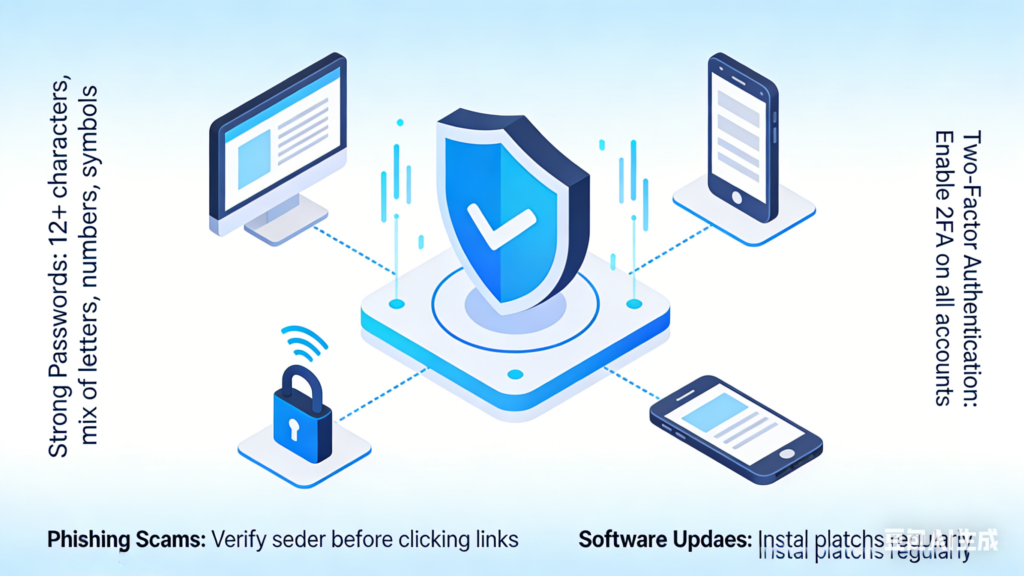
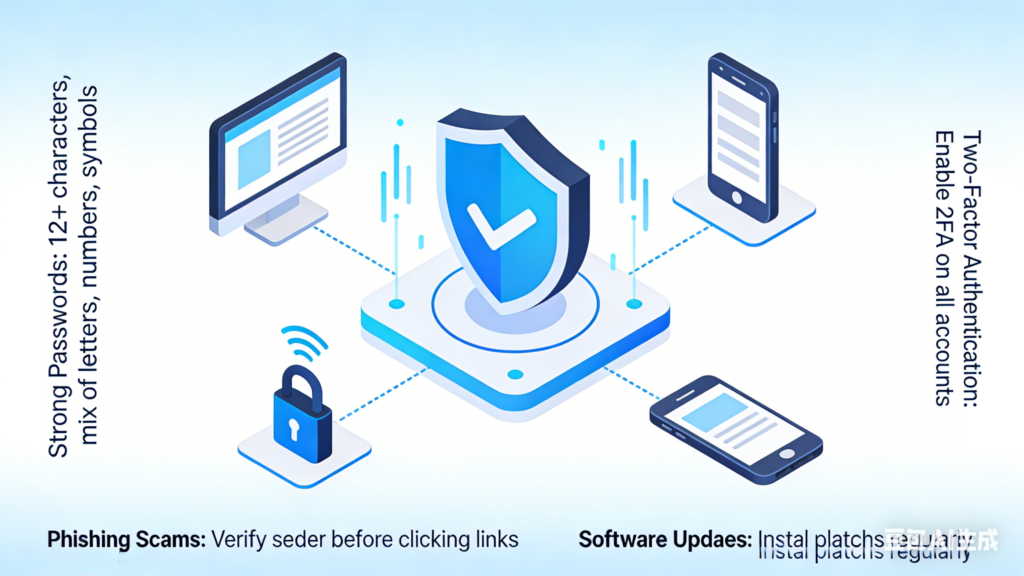
1. Use Strong and Unique Passwords
One of the most important cybersecurity basics is creating strong passwords.
Weak passwords remain one of the main reasons accounts get hacked. Many people still reuse the same password across multiple websites, making it easy for hackers to gain access to several accounts at once.
Best password practices include:
- Use at least 12–16 characters
- Combine letters, numbers, and symbols
- Avoid personal information such as birthdays
- Use a different password for every account
Password managers such as Bitwarden, 1Password, and LastPass can help generate and store secure passwords safely.
2. Enable Two-Factor Authentication (2FA)
Another essential cybersecurity basic is two-factor authentication (2FA).
2FA adds an extra layer of security by requiring a second verification step after entering your password. This could be a one-time code sent to your phone or generated by an authentication app.
Popular authentication apps include Google Authenticator and Microsoft Authenticator.
Even if hackers obtain your password, they cannot access your account without the second authentication factor.
3. Recognize Phishing Attacks
Phishing is one of the most common cyber threats today. Attackers impersonate legitimate companies and trick users into revealing sensitive information.
Typical phishing messages may:
- Claim your account has a security problem
- Ask you to verify personal information
- Include suspicious links or attachments
- Create urgency to force quick action
To avoid phishing scams:
- Always check the sender’s email address carefully
- Do not click unknown links
- Visit official websites directly
- Ignore messages requesting passwords or financial details
Recognizing phishing attempts is a critical cybersecurity basic in protecting your digital life.
4. Keep Devices and Software Updated
Software updates often include important security patches that fix vulnerabilities.
Hackers frequently exploit outdated systems to gain unauthorized access. Keeping devices updated is one of the easiest cybersecurity basics to follow.
Always update:
- Operating systems
- Web browsers
- Mobile apps
- Antivirus software
- Smart home devices
Enabling automatic updates helps ensure your devices stay protected.
5. Secure Your Home Wi-Fi Network
With more smart devices in homes, securing your Wi-Fi network has become another key cybersecurity basic.
Steps to secure your home network include:
- Change the default router password
- Use WPA3 encryption if available
- Create a guest network for visitors
- Disable unnecessary remote access
These measures prevent unauthorized users from accessing your network.
6. Backup Important Data Regularly
Even with strong cybersecurity habits, accidents and cyberattacks can still happen.
Regular backups ensure that important files remain safe in case of ransomware attacks, hardware failures, or accidental deletions.
Security experts recommend the 3-2-1 backup rule:
- Keep 3 copies of important data
- Store them on 2 different storage types
- Keep 1 copy offsite or in the cloud
Backing up data is one of the simplest but most overlooked cybersecurity basics.
The Future of Personal Cybersecurity
Looking ahead, cybersecurity will continue evolving alongside new technologies. Artificial intelligence, biometric authentication, and advanced encryption are already helping improve digital security.
However, technology alone cannot guarantee safety. The most effective protection comes from user awareness and good security habits.
By understanding cybersecurity basics and staying informed about emerging threats, individuals can significantly reduce the risk of cybercrime.
Final Thoughts
Learning cybersecurity basics is essential in 2025. As digital technology becomes more integrated into everyday life, protecting personal information is no longer optional—it is necessary.
Simple actions like using strong passwords, enabling two-factor authentication, recognizing phishing attempts, securing Wi-Fi networks, and backing up data can dramatically improve online safety.
With the right knowledge and habits, you can confidently enjoy the benefits of the digital world while keeping your personal data secure. 🔐🌐tunities along with new risks. But with the right knowledge and tools, you can enjoy the benefits of the digital world while keeping your personal information safe. 🔐🌐