Start With the Fundamentals: Optimize Your Bedroom Environment
If you want a truly relaxing bedroom for better sleep, your environment has to work with your body, not against it. Before you buy décor or new furniture, dial in these basics: temperature, light, noise, and air quality. This is the foundation of any real sleep-friendly bedroom.
Ideal Bedroom Temperature for Deep Sleep
Your body naturally cools down at night, so a cool bedroom temperature is one of the easiest wins for better sleep.
- Aim for 60–67°F (15–19°C) for most adults
- Use breathable bedding materials like cotton, linen, or bamboo
- Swap heavy comforters for layered blankets you can adjust
- If your room runs hot, consider:
- A quiet fan or energy-efficient AC
- Light, moisture-wicking sheets
- A cooling mattress topper
A consistent, cool bedroom temperature for sleep helps you fall asleep faster and stay in deeper, more restorative sleep cycles.
Light Control for Melatonin and Better Sleep
Light is a powerful signal for your brain. To create a better sleep environment, you want your bedroom to get darker as bedtime gets closer.
- Use blackout curtains for sleep to block streetlights and early sun
- Add soft bedroom lighting with warm bulbs (around 2700K) for evening
- Dim lights 60–90 minutes before bed to support melatonin production
- Keep phones, tablets, and TVs out of your direct line of sight at night
- If you need light, try:
- A low, warm bedside lamp
- A red or amber night light
The goal: your bedroom should tell your brain, “It’s night, it’s safe, it’s time to wind down.”
Noise Management for a Calm Sleep Space
Even if you “get used to it,” noise still disrupts deep sleep. A quiet bedroom is key to any sleep sanctuary.
Simple noise reduction for your bedroom:
- Use white noise for sleep (fan, sound machine, or app) to mask:
- Traffic
- Neighbors
- Household sounds
- Try earplugs if you’re sensitive to sound
- Add soft surfaces that absorb noise:
- Rugs
- Curtains
- Upholstered headboard
- If possible, position your bed away from noisy windows or shared walls
These quiet bedroom tips help your nervous system relax and make it easier to stay asleep.
Air Quality and Ventilation for a Healthier Bedroom
Clean, fresh air is an underrated part of a relaxing bedroom design and better sleep environment.
- Open windows regularly to ventilate your bedroom, when weather and safety allow
- Use an air purifier if you deal with dust, pets, or allergies
- Choose houseplants for bedroom air (like snake plant or peace lily) for a natural touch, not as a replacement for ventilation
- Wash bedding weekly in warm water to reduce dust mites and allergens
- Avoid heavy synthetic fragrances that can irritate breathing
Good bedroom air quality keeps your space feeling light, clean, and calm—exactly what you want from a stress-free bedroom setup designed for deep, restorative sleep.
Declutter and Simplify for Mental Calm
How clutter affects stress and sleep
If my bedroom is messy, my brain stays “on.” Clutter is visual noise, and it quietly raises stress and makes it harder to fall asleep and stay asleep. A crowded nightstand, piles of laundry, and random cords all signal “unfinished tasks,” not “rest.”
In a calming bedroom for better sleep, everything you see should feel simple and intentional. Less stuff = fewer distractions = deeper sleep.
Quick signs your clutter is hurting your sleep:
- You feel tense walking into your bedroom
- You scroll your phone in bed to “avoid” looking at the mess
- You wake up still tired, even after a full night
Step-by-step declutter bedroom routine
You don’t need a full weekend to do a relaxing bedroom makeover. Break it into fast, realistic steps that fit normal U.S. routines.
Do this simple 4-step declutter routine:
-
Clear the sleep zone (15–20 minutes)
- Empty your nightstands
- Remove extra décor from around the bed
- Keep only: lamp, book, water, maybe a small plant or candle
-
Tackle visible surfaces (20–30 minutes)
- Dresser tops, chair backs, floor “clothes piles”
- Put trash in a bag, laundry in a basket, “belongs elsewhere” in a bin
- Get everything off the floor around your bed for a clean, calm look
-
Edit what actually lives in your bedroom (30–45 minutes)
- Remove work stuff, mail, gym gear, and random storage
- Keep only items that support rest: sleep-friendly bedding, cozy loungewear, a book, maybe a diffuser
-
Set a weekly reset (10 minutes, same day each week)
- Quick pickup: laundry out, trash out, surfaces cleared
- This keeps your sleep sanctuary ideas from slipping back into chaos
Organized storage for a stress-free bedroom
Getting rid of clutter is step one. Step two is smart, simple storage so it stays clean without a ton of effort.
Easy storage ideas for a relaxing bedroom design:
-
Under-bed storage:
Use low bins or drawers for off-season clothes, extra blankets, or spare bedding. Great for smaller U.S. apartments or older homes with limited closets. -
Nightstands with drawers:
Hide chargers, books, lip balm, earplugs, and sleep masks so surfaces stay clear and sleep-friendly. -
Baskets and bins:
- One basket for throw blankets
- One bin for “end-of-day dump” (wallet, keys, headphones)
- One hamper for laundry so clothes never hit the floor
-
Closet helpers:
Use slim hangers, over-the-door organizers, and simple shelf dividers to keep clothes from exploding into your bedroom.
The goal: everything has a home, so your bedroom stays stress-free with just a quick nightly pickup.
Minimalist bedroom mindset for relaxation
A minimalist bedroom for relaxation isn’t about being cold or boring. It’s about only keeping what actually helps you relax or sleep better.
When I set up a sleep-friendly bedroom, I ask:
- Does this help me rest, or does it distract me?
- Would I miss this if it disappeared tomorrow?
- Is this here because I love it, or because I didn’t know where else to put it?
Adopt this simple minimalist mindset:
- Fewer items, higher quality: One cozy throw you love beats five random ones.
- Clear surfaces: Empty or almost-empty nightstands and dressers instantly make the room feel calmer.
- Intentional décor: A couple of soothing bedroom colors, a plant, and soft lighting are enough.
If it doesn’t support a calming bedroom idea or a better sleep environment, it doesn’t need to live in your bedroom.
Choose a Soothing Color Palette for Better Sleep
Best calming bedroom colors for better sleep
For a truly relaxing bedroom design and better sleep environment, I stick to soft, low‑saturation colors:
| Calming Color | Why It Helps Sleep | Easy US-Friendly Combos |
|---|---|---|
| Soft blues | Lowers heart rate, feels cool and quiet | Blue + white + light wood |
| Sage / soft greens | Feels natural, steady, and safe | Sage + beige + cream |
| Warm grays | Neutral, not distracting | Gray + white + taupe |
| Greige / beige | Cozy, hotel-like calm | Greige + ivory + tan |
| Muted blush | Gentle, not “pink overload” | Blush + cream + light gray |
Tip: Aim for matte or eggshell finishes on walls. Glossy paint reflects light and feels more “awake.”
Colors to avoid in a relaxing bedroom
Some shades hype you up instead of helping you sleep:
- Bright red or neon colors – trigger energy, not rest.
- Intense orange or hot pink – fun for a game room, not a sleep sanctuary.
- Very dark black walls – can feel heavy and cramped in smaller US bedrooms.
- High-contrast patterns (black/white stripes, bold geometric walls) – visually noisy, not a stress-free bedroom setup.
If you love these colors, use them in tiny doses only, not on main walls.
How bedroom colors affect mood and sleep
Bedroom colors quietly shape how your brain and body feel:
- Cool tones (blue, green, soft gray) → calming, help your body wind down.
- Warm but muted tones (beige, sand, clay) → cozy and safe without feeling sleepy during the day.
- Super bright or neon tones → stimulate your brain, fight melatonin, and make deep sleep harder.
For a sleep-friendly bedroom, keep walls and big furniture in calm, muted shades and save stronger colors for small decor.
Using accent colors without overwhelming the space
You can still show your style without wrecking your sleep:
- Keep 70–80% of the room in soothing bedroom colors (walls, rug, big furniture).
- Use 20–30% as accents:
- Throw pillows
- Blankets and throws
- Art prints
- Lamps or small decor
- Choose muted versions of bold colors:
- Instead of bright red → rust, terracotta, or wine
- Instead of neon yellow → mustard or honey
Rule I use in US homes:
- Calm base: light blue/green/greige walls
- Soft contrast: white or cream bedding
- Small accents: 2–3 pillows or a throw in a deeper tone (navy, forest green, rust)
This way, your calming bedroom ideas still look stylish, but your space stays truly restful and geared for better sleep.
Design a Supportive Bed Layout and Positioning
Best bed placement for a sleep-friendly bedroom
For a truly sleep-friendly bedroom, I always start with bed placement. A few simple layout tweaks can make your whole room feel calmer:
- Put the bed on the longest solid wall, with the headboard firmly against it for support and stability.
- Aim to see the door from the bed, but don’t line the bed up directly with the doorway. This “command position” feels safer and more relaxing.
- Center the bed if you can, so both sides are usable. That balance really helps a relaxing bedroom design feel intentional.
Room flow and accessibility around the bed
A better sleep environment also means you can move around easily without squeezing or tripping:
- Leave at least 24–30 inches of walking space on both sides of the bed.
- Place nightstands on each side for lamps, water, and essentials, so you’re not getting up all night.
- Keep pathways to the bathroom and closet clear. No storage piles, no boxes, no random chairs blocking the way.
What to avoid when positioning your bed
To keep your bedroom for deep sleep as calm as possible, I’d avoid:
- Right under a window – drafts, outside noise, and early light can mess with sleep.
- Too close to doors or heavy traffic areas – you’ll feel exposed and more alert, not relaxed.
- Under heavy shelves or art directly over your head – looks stylish, but it can feel subconsciously stressful.
- Against shared or noisy walls (like a TV wall) if you can help it – especially in apartments or townhomes.
Adding a cozy reading nook or simple seating area
If you have the space, a cozy reading nook or small seating area makes your sleep sanctuary feel next-level:
- Add a small accent chair or lounge chair, a soft throw, and a simple side table for a book or tea.
- Place it near a window if possible to catch natural light during the day.
- Use a warm table lamp or floor lamp to keep the nook relaxing instead of harsh.
- Keep it simple: no giant desks, no work setup. This spot should support wind-down time, not work stress.
Dialing in your bed placement for better sleep isn’t about perfection; it’s about making the room feel clear, grounded, and easy to use. When the layout flows, your brain can finally relax.
Invest in Quality Bedding and Comfort Layers
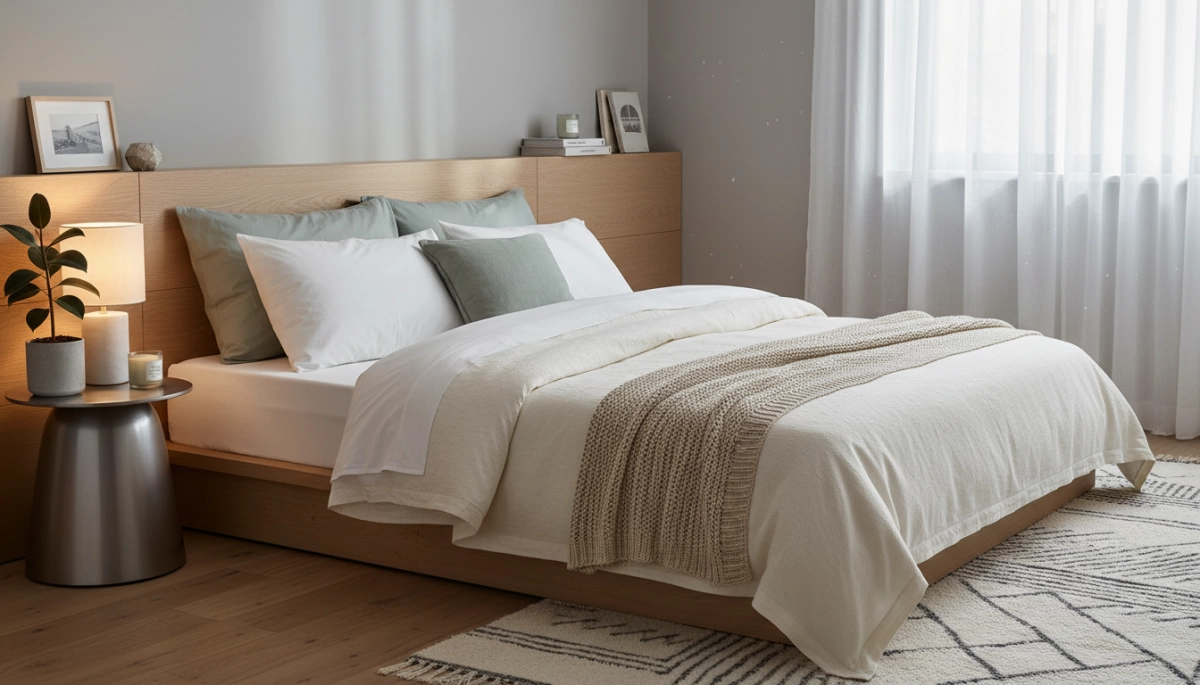
If you want a truly relaxing bedroom for better sleep, your bed has to do the heavy lifting. A sleep-friendly bedroom starts with a mattress and bedding that actually support how you sleep, not just how the bed looks.
Choosing the Right Mattress for Your Sleep Style
Your mattress is the base of your sleep sanctuary. Match it to your sleep position:
-
Side sleepers
- Go for medium-soft to medium feel
- Look for pressure relief at shoulders and hips
- Memory foam or hybrid mattresses work best
-
Back sleepers
- Choose medium-firm for solid spine support
- You want support without feeling like you’re on a board
-
Stomach sleepers
- Aim for firm to keep your hips from sinking
- This helps prevent lower back pain
-
Hot sleepers
- Pick cooling mattresses with gel foam, breathable covers, or coils
- Avoid cheap, dense foam that traps heat
In the U.S., most people keep a mattress 8–10 years. If you wake up sore or sleep better in a hotel, it’s time to upgrade.
Comfortable Bedding for Rest and Relaxation
Comfortable bedding for rest and relaxation is non-negotiable in a calming bedroom:
-
Sheets:
- Choose breathable fabrics like cotton percale, cotton sateen, or linen
- Aim for quality over thread count hype (around 250–400 is plenty)
-
Duvet/Comforter:
- Go lighter if you sleep hot; heavier if you love a cozy, cocoon feel
- Look for down-alternative if you have allergies
-
Pillows:
- Side sleepers: higher, firmer pillows
- Back sleepers: medium loft
- Stomach sleepers: thin, soft pillow or no pillow
- Replace every 1–2 years for proper neck support
Layering Blankets, Throws, and Pillows for Comfort
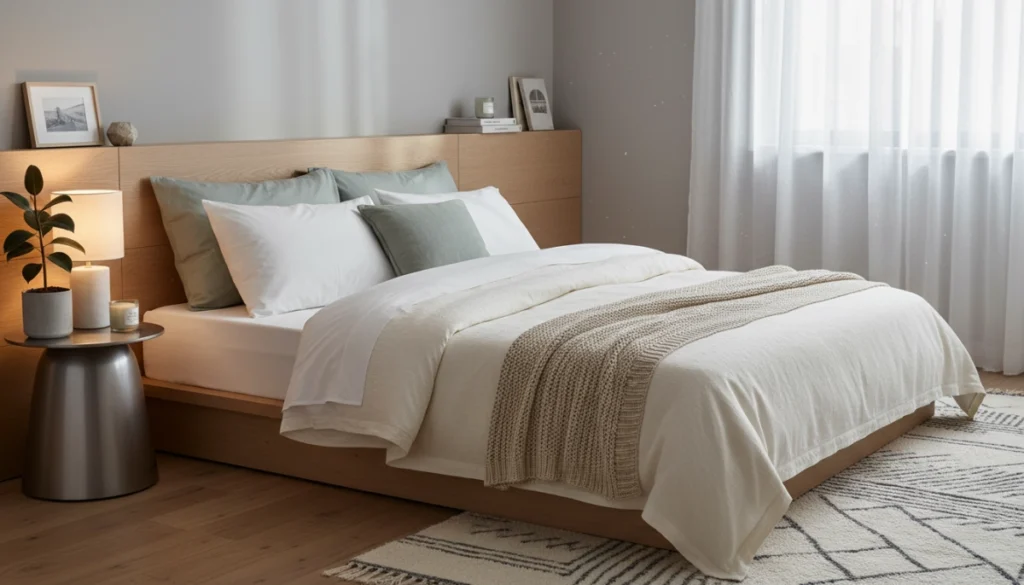
Layering is an easy cozy bedroom tip that makes your bed feel like a hotel:
- Start with: mattress + mattress topper (optional) + fitted sheet
- Add: flat sheet + quilt/blanket + duvet/comforter
- Finish with:
- 2–4 sleeping pillows that match your sleep style
- 1–2 decorative pillows or a lumbar pillow
- One throw blanket at the foot of the bed for quick warmth
This layered bedroom setup lets you adjust for season changes, A/C settings, and personal comfort without fighting your bedding all night.
Weighted Blankets and Natural Fabrics for Deeper Sleep
If you’re trying to build a better sleep environment, small upgrades can make a big difference:
-
Weighted blankets
- Can help with anxiety, restlessness, and racing thoughts
- Choose about 8–12% of your body weight (for most adults, 12–20 lbs)
- Use on top of your regular bedding so you can kick it off easily if you get warm
-
Natural fabrics
- Cotton, linen, bamboo, and wool are more breathable than most synthetics
- They help keep a cool bedroom temperature for sleep, especially in U.S. homes that run warm in summer
- Great for sensitive skin and better bedroom air quality
If I’m building a stress-free bedroom setup, I always start by dialing in the mattress, then add breathable sheets, a supportive pillow, and one or two comfort layers. Once your bedding is right, the rest of your relaxing bedroom design finally pays off.
Master Lighting for Wind-Down
A calm, sleep-friendly bedroom lives or dies by the lighting. If you want a real sleep sanctuary, you can’t rely on one bright ceiling light and call it done.
Layered bedroom lighting for relaxation
I use layered bedroom lighting so the room can shift from “day mode” to “wind-down mode” fast:
- Overhead light (dimmer if possible): For cleaning, organizing, getting dressed.
- Bedside lamps / wall sconces: For reading and relaxing before sleep.
- Accent lights: Soft LED strips behind the headboard, under the bed, or in a corner lamp for a cozy glow.
- Night light: A very dim, warm night light for late-night bathroom trips so you don’t fully wake up.
If you rent and can’t rewire anything, plug-in lamps and smart bulbs give you the same layered look without a remodel.
Warm vs cool light for sleep
For a relaxing bedroom design, color temperature matters:
- Warm light (around 2200K–3000K): Best for evenings; feels like sunset, tells your brain it’s time to slow down.
- Neutral light (3000K–4000K): Fine for daytime tasks in the bedroom.
- Cool light (5000K+): Skip this at night; it’s closer to daylight and can keep you wired.
In a bedroom for deep sleep, I keep warm, soft bedroom lighting only after dinner—no bright white bulbs blasting in my face.
Simple evening lighting routine before bed
Here’s an easy evening lighting routine that works well for most of us in the U.S. with busy schedules:
- 2–3 hours before bed: Turn off harsh overheads; switch to lamps only.
- 1–2 hours before bed: Use only warm, low-level lights in the bedroom and bathroom.
- 30–60 minutes before bed: Dim everything as low as possible, keep light focused (like a small bedside lamp).
- Right before sleep: Turn all lights off or use a very dim, warm night light if needed for comfort or safety.
This kind of routine trains your brain to associate this lighting shift with “time to sleep,” which is huge for better sleep hygiene.
Reducing blue light exposure in the bedroom
Blue light from phones, tablets, TVs, and bright LEDs hits melatonin hard. To keep your sleep-friendly bedroom truly relaxing:
- No TVs in the bedroom if you can help it—this alone changes the whole vibe.
- Set a “no screen” time (ideally 60 minutes before bed).
- If you must use screens:
- Turn on Night Shift / Blue Light Filter on all devices.
- Lower brightness way down.
- Use blue light–blocking glasses in the evening.
- Skip bright LED alarm clocks; choose a small, dimmable alarm or one that only lights up when tapped.
- If streetlights shine in, use blackout curtains so outside blue/white light doesn’t leak in.
Dialing in layered bedroom lighting, using warm light for sleep, and cutting blue light is one of the fastest, low-cost ways to turn your room into a true sleep sanctuary.
Incorporate Calming Sensory Elements
Aromatherapy for better sleep
If you want a truly relaxing bedroom for better sleep, scent matters more than people think. I keep it simple and safe:
- Best relaxing scents for sleep: lavender, chamomile, sandalwood, cedarwood, and vanilla
- How to use them:
- A water-based diffuser on a timer for 30–60 minutes before bed
- A few drops of essential oil on a cotton pad near the bed instead of on your pillow
- Linen sprays (alcohol-free if you’ve got sensitive skin) on sheets and curtains
Skip burning strong candles while you’re sleeping. If you use candles, blow them out before you actually fall asleep.
Soothing bedroom textures and fabrics
Touch is a big part of a calming bedroom idea. If it feels scratchy or sweaty, it’s not helping your sleep.
- Bedding: breathable cotton, bamboo, or linen sheets
- Blankets: soft knits, light quilts, or a smooth comforter instead of stiff, noisy materials
- Rugs: a cushy rug by the bed so your feet hit something soft first thing in the morning
- Pillows: comfortable pillows for neck support, not just for looks
Aim for soft, breathable, low-noise fabrics. The less you notice them, the better your sleep environment works.
Natural elements and plants for a relaxing bedroom
Bringing in a few natural elements is one of the easiest sleep sanctuary ideas. It makes the room feel grounded and calm.
- Best houseplants for bedroom air: snake plant, pothos, peace lily, or ZZ plant (low-maintenance, good for U.S. homes)
- Simple natural touches:
- Wood nightstands or bed frame
- Woven baskets for storage
- Stone or ceramic trays for jewelry and small items
Don’t turn your room into a jungle—2–4 plants are enough to make the space feel peaceful without adding clutter.
Relaxing bedroom sounds and white noise options
Sound can make or break a sleep-friendly bedroom. If your home is noisy (neighbors, traffic, city sounds), add some control.
- White noise for sleep:
- A white noise machine with fan, rain, or ocean sounds
- A box fan or ceiling fan for both noise and air movement
- A white noise app on your phone (screen facedown, notifications off)
- Other calming sound options:
- Soft instrumental music or nature sounds at a low volume
- Earplugs if you’re extra sensitive to noise
The goal: no sudden spikes in sound, just a steady, low background that lets your brain relax and stay asleep.
Establish Bedroom Boundaries and Habits for Better Sleep
Create a Tech‑Free, Sleep‑Friendly Bedroom
If you want a truly relaxing bedroom for better sleep, screens have to go.
- No TV, no laptop, no scrolling in bed.
- Charge your phone outside the bedroom or across the room.
- Use a basic alarm clock instead of your phone.
- Turn on Do Not Disturb or Sleep Focus 60–90 minutes before bed.
- Keep lighting soft and warm so your bedroom stays a calm, sleep-friendly space.
This single shift turns your room into a sleep sanctuary, not a second office.
Use Your Bed Only for Sleep and Intimacy
A core sleep hygiene rule: bed = sleep + intimacy only.
Avoid:
- Working on your laptop in bed
- Watching Netflix for hours under the covers
- Long phone calls or doomscrolling while lying down
Why it matters:
- Your brain starts to link your bed with rest, not stress or work.
- Over time, just getting in bed can naturally trigger relaxation and deep sleep.
If you can’t sleep after 20–30 minutes, get up, sit in a chair, read something calm, then go back to bed when sleepy.
Simple Wind‑Down Routine Before Bed
A calm routine trains your body to expect sleep. Keep it simple and repeatable.
Try a 20–30 minute wind‑down like this:
- Dim the lights and shut down screens
- Take a warm shower or wash your face
- Do light stretching or gentle yoga
- Read a physical book (nothing work-related)
- Sip caffeine‑free herbal tea (like chamomile)
- Do 5 minutes of deep breathing or a short meditation
Stick to roughly the same order each night. Consistency is what makes it work.
Align Bedroom Habits With Your Sleep Schedule
To build a truly sleep-friendly bedroom:
- Pick a target wake-up time and protect it daily, even on weekends.
- Count back 7–9 hours to set your ideal bedtime window.
- Start your wind‑down routine 30–60 minutes before that time.
- Avoid:
- Caffeine after mid‑afternoon
- Heavy meals and alcohol close to bedtime
- Intense late‑night workouts
Over a couple of weeks, your body clock adjusts, your bedroom feels calmer, and your deep sleep gets more consistent. This is how you turn your room into a real sleep sanctuary instead of just a place you crash.