The concept of a smart home once felt like something from science fiction. Today, it has become a reality in millions of households across North America and Europe. From voice-controlled lighting to intelligent security systems, the Internet of Things (IoT) is transforming how people interact with their living spaces.
Smart homes are not just about convenience—they are reshaping everyday life by improving energy efficiency, home security, health monitoring, and daily productivity. As connected devices become more affordable and accessible, modern homes are evolving into intelligent environments that respond to our needs.
What Exactly Is a Smart Home?
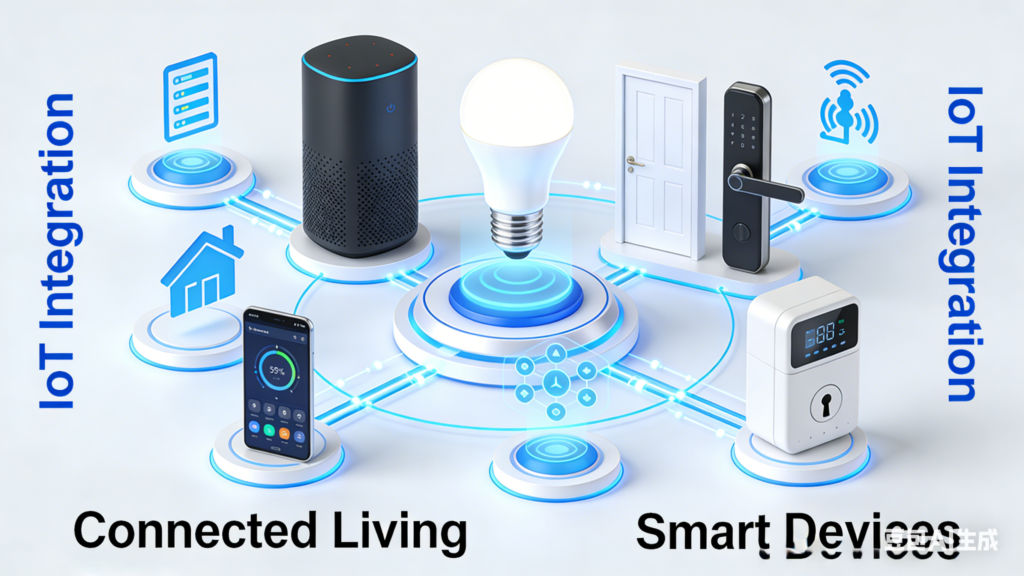
A smart home refers to a residence equipped with devices connected through the Internet of Things (IoT). These devices communicate with each other and can be controlled remotely through smartphones, voice assistants, or automated systems.
In many homes across the United States and Europe, smart technologies now manage everyday tasks such as:
- Adjusting lighting automatically
- Controlling home temperature
- Monitoring security cameras
- Managing home appliances
- Tracking energy consumption
Instead of manually controlling each device, homeowners can create automated routines that simplify daily life.
The Rise of Voice-Controlled Living
One of the biggest drivers of smart home adoption has been the rise of voice assistants such as Amazon Echo, Google Nest Hub, and Apple HomePod.
With simple voice commands, users can:
- Turn lights on or off
- Play music in different rooms
- Check weather updates
- Control thermostats
- Lock doors remotely
This voice-driven interface has made technology more intuitive, especially for families and older adults who may not want to interact with complex apps.
In many American homes, saying “Good morning” to a smart assistant can trigger a series of actions—lights gradually turn on, coffee begins brewing, and the thermostat adjusts to a comfortable temperature.
Smart Security: Peace of Mind at Home
Home security has seen one of the most dramatic transformations through IoT technology.
Modern systems allow homeowners to monitor their property from anywhere in the world. Smart doorbells, motion sensors, and cloud-based cameras provide real-time alerts and live video feeds.
Devices such as Ring Video Doorbell and Arlo Pro Security Camera have become extremely popular in suburban neighborhoods across the United States and the United Kingdom.
These systems allow homeowners to:
- See who is at the door remotely
- Receive alerts when motion is detected
- Record and store security footage
- Communicate with visitors through mobile apps
For many families, this added layer of security brings both convenience and peace of mind.
Energy Efficiency and Sustainable Living
One of the most exciting benefits of smart home technology is its potential to improve energy efficiency.
Smart thermostats and lighting systems automatically adjust based on occupancy and daily routines. For example, when no one is home, heating and cooling systems can reduce energy consumption.
Products like the Nest Learning Thermostat learn a homeowner’s schedule and optimize temperature settings accordingly. Over time, this can significantly reduce energy bills.
In Europe, where sustainability is a major priority, smart homes are playing an important role in reducing carbon footprints. Intelligent energy management systems allow households to monitor their electricity usage and make environmentally friendly choices.
Smart Kitchens and Connected Appliances
The kitchen is another area where IoT technology is making everyday life easier.
Connected appliances now allow homeowners to manage cooking and food storage more efficiently. Smart refrigerators can track groceries, suggest recipes, and notify users when items are running low.
Meanwhile, Wi-Fi-enabled ovens and coffee machines can be controlled remotely through mobile apps.
Imagine leaving the office in New York and starting your oven before you arrive home, or scheduling coffee to brew automatically each morning. These small conveniences are transforming daily routines.
The Future of Smart Living
The future of smart homes is even more exciting. Emerging technologies such as artificial intelligence and advanced sensors will make homes more responsive than ever before.
Future smart homes may be able to:
- Detect health changes through wearable devices
- Automatically order groceries when supplies run low
- Adjust lighting and temperature based on mood or weather
- Integrate seamlessly with electric vehicles and renewable energy systems
As IoT technology continues to evolve, homes will increasingly adapt to the habits and preferences of their occupants.
Smart homes are no longer a luxury reserved for technology enthusiasts. They are quickly becoming a normal part of modern living in many Western countries.
By combining convenience, security, and sustainability, IoT technology is transforming houses into intelligent living spaces that enhance everyday life.
From voice-controlled assistants to energy-saving thermostats, the smart home revolution is only just beginning. As technology continues to advance, the homes of the future will not only respond to our commands—they will anticipate our needs.
And perhaps the most exciting part is that this transformation is already happening in homes around the world. 🌐🏡✨