Getting Started with the Solo Travel Mindset
If you’re Googling “solo travel tips”, you’re probably feeling a mix of:
“I want to do this” and “What if something goes wrong?”
That tension is normal. I’ve felt it on every first-day-of-a-new-trip bus ride. The goal isn’t to erase fear—it’s to build a mindset that lets you travel alone confidently and safely, even when things aren’t perfect.
Why Solo Travel Is Worth It
Traveling alone isn’t just about “finding yourself.” It’s about real, practical freedom:
- Independence:
You decide when to wake up, where to eat, what to skip, and when to change plans. No group votes. No drama. - Flexibility:
If you love a place, you stay longer. If you hate it, you leave. Solo travel gives you full control of your time and money. - Personal growth:
You figure out you can handle more than you thought—navigating trains, talking to strangers, solving problems alone. That confidence sticks with you long after the trip.
These are the core benefits of traveling alone: more freedom, more self‑trust, and a clearer sense of what you actually like—not what everyone else picked.
Real Fears About Solo Travel (And How To Handle Them)
Let’s be real about the big three:
1. Safety
You’re not wrong to worry. You’re smart.
- Research safe solo travel destinations and neighborhoods, not just countries.
- Share your location with someone you trust.
- Use trusted transport (licensed taxis, rideshare apps, official buses).
- Keep a simple solo travel safety checklist: backup cards, emergency cash, passport photos, important numbers.
2. Loneliness
Yes, you’ll have quiet moments. That’s not failure—that’s part of it.
- Stay in social hostels or small guesthouses where people actually talk.
- Join walking tours, cooking classes, or day trips—easy ways to meet people without forcing it.
- Plan one small “connection moment” a day: a coffee shop chat, a group tour, a shared meal.
3. Getting lost or overwhelmed
Happens to everyone, especially beginners.
- Download offline maps before you land.
- Screenshot key info: hotel name, address, landmarks, metro stops.
- If you’re confused, step into a café or hotel lobby, regroup, and ask for help calmly.
Your fear doesn’t mean “don’t go.” It means “go prepared.” That’s the mindset shift.
Solo Travel for Beginners: Start Small
You don’t need to move across the world with one backpack and instant confidence. For solo travel for beginners, think small, controlled experiments:
- Start with 1–3 nights in a nearby city in your own country.
- Choose somewhere with easy public transport and plenty of cafes, food options, and things to do.
- Pick one or two simple activities per day—no overloaded itineraries.
The goal is not to be a hardcore solo backpacker on trip one. The goal is:
Prove to yourself you can handle being alone somewhere new.
Simple Goals for Your First Solo Trip
Ditch the idea of a “perfect” itinerary. For your first time solo travel, set easy, realistic goals like:
- Navigate from the airport or station to your stay by yourself.
- Eat one meal alone at a restaurant or café.
- Try one new local activity (market, museum, class, short hike).
- Talk to at least one person each day (host, barista, fellow traveler).
Success is showing up and trying, not ticking off every sight.
Solo Travel Mindset Tips
A solid solo travel mindset matters more than the “perfect” packing list. I stick to these rules:
- Stay calm: When something goes wrong, pause. Sit down, drink water, breathe, then decide your next move. Panic is the enemy; time is your friend.
- Stay flexible: Delays, closures, weird weather—it all happens. Swap “this ruined my day” for “okay, what’s Plan B?”
- Stay open‑minded: Some of your best moments will come from things you didn’t plan—random cafés, side streets, conversations you didn’t expect.
- Stay prepared, not paranoid: Carry what you need for safety, but don’t treat every person like a threat. Most people are neutral or kind.
If you remember one thing, make it this:
You don’t need to be fearless to travel solo. You just need to be willing, prepared, and a little bit brave.
Choosing the Best Solo Travel Destination
How to pick beginner‑friendly solo travel destinations
When I plan solo travel for beginners, I keep it simple:
- Short flight from the U.S. (4–6 hours if possible)
- Good public transport (metros, buses, clear signs)
- Walkable city centers
- English widely spoken
- Clear tourist infrastructure (tours, info centers, easy airport transfers)
Beginner‑friendly solo travel destinations usually feel predictable, safe, and easy to navigate, not “epic and complicated.”
Safest solo travel destinations for 2026 (including solo female travel)
Based on safety scores, low crime, and strong tourism systems, here are safe solo travel destinations for 2026 (great for solo female travel too):
In the U.S.:
- Portland, Maine – Safe, walkable, coastal, relaxed.
- Austin, Texas – Friendly locals, music, food, easy rideshare.
- Denver/Boulder, Colorado – Outdoors, clean, safe vibe.
International:
- Canada (Vancouver, Montreal, Toronto) – Very solo‑friendly, familiar culture.
- Portugal (Lisbon, Porto) – Affordable, warm, easy public transport.
- Ireland (Dublin, Galway) – Super friendly, English-speaking.
- Japan (Tokyo, Kyoto, Osaka) – Ultra safe, incredible transport system.
- New Zealand (Auckland, Wellington, Queenstown) – Great for solo adventure.
- Scandinavia (Copenhagen, Stockholm) – Very safe, organized, English widely spoken.
These are ideal solo travel destinations if you want safety, structure, and low drama.
What to look for: safety, transport, language, local vibe
When I choose where to travel alone, I check:
-
Safety scores & crime data
- Use: Numbeo, local government travel advisories, Reddit city subs.
- Search: “Is [city] safe for solo travelers / solo female travelers?”
-
Transport & ease of getting around
- Reliable public transport (metro, trams, buses)
- Affordable rideshare (Uber, Lyft, Bolt, Grab)
- Walkable areas and clear street signs
-
Language & communication
- English level (reviews and blogs mention this a lot)
- Easy‑to‑use translation apps and offline maps
- Clear tourist info in English
-
Local vibe
- Are locals known to be friendly and helpful?
- Is it more party or chill? (pick what fits your energy)
- Are there solo travelers and backpackers around, or is it mostly tour groups?
Best solo travel destinations for women, introverts, and budget travelers
For solo women (safety + ease):
- Japan, Portugal, Ireland, Canada, Scandinavia
- In the U.S.: Seattle, San Diego, Austin, Minneapolis, Portland (OR & ME)
For introverts (calm, low pressure, nature):
- New Zealand – Trails, lakes, small towns.
- Iceland – Scenic, quiet, dramatic landscapes.
- Pacific Northwest (Oregon/Washington) – Coffee shops, nature, chill cities.
- Smaller European cities – Ljubljana, Bruges, Porto.
For budget solo travelers (cheap solo travel destinations):
- Mexico (Mexico City, Oaxaca, Mérida) – Affordable food, culture, great for U.S. travelers.
- Portugal – Good value in Western Europe.
- Central America (Guatemala, Nicaragua, El Salvador’s surf towns) – For more adventurous solo backpacking.
- Southeast Asia (Thailand, Vietnam, Malaysia) – Classic budget solo travel hubs.
Red flags and places to be cautious on your first solo trip
For a first time solo travel experience, I avoid:
- High violent crime rates (research before booking)
- Places where scams and harassment are very common
- Cities with weak public transport and only cash taxis
- Areas known for heavy drug/party scenes if that’s not your thing
- Regions with recent political unrest or major travel advisories
Basic rule:
If recent solo travel blogs, Reddit threads, or TikToks are full of “I felt unsafe”, “constant harassment”, or “taxis tried to scam me”, I don’t pick that spot for my first solo trip.
Choose a place that makes it easy to feel safe, move around, and relax. Confidence comes from picking the right solo travel destination, not from forcing yourself into the hardest possible place.
Solo Travel Planning Guide and Budget Tips
Step‑by‑Step Solo Travel Planning Timeline
Here’s how I plan a solo trip from idea to takeoff:
6–3 months out
- Pick your solo travel destination and rough dates
- Check entry rules: passport validity, visas, vaccines
- Set a total budget (flight + stay + daily spend + buffer)
- Start tracking flight prices (Google Flights, Skyscanner, Hopper)
3–1 months out
- Book flights when prices look stable
- Reserve accommodation in safe, central areas
- Buy solo travel insurance (medical + trip interruption)
- Plan key activities or tours that must be booked ahead
4–2 weeks out
- Screenshot and save all bookings offline
- Download offline maps and local transport apps
- Tell a trusted contact your itinerary
- Set up bank travel notices and test your cards
Week of departure
- Confirm check‑in, seat, and baggage rules
- Print/back up documents (passport photo, insurance, bookings)
- Prep basic cash in local currency (if needed)
- Double‑check safety, weather, and local holidays
First Time Solo Travel Advice for Flights & Accommodation
When it’s your first time solo traveling, keep it simple and safe:
Flights
- Book flights that arrive during daylight if possible
- Avoid super tight layovers on your first solo trip
- Use major airlines or well‑reviewed budget carriers
- Compare total price (bags + seat fees), not just the base fare
Accommodation
- Location beats luxury: stay near public transport and food
- Read recent reviews from solo travelers and solo women
- Pay attention to comments on safety, noise, and staff support
- For your first night, book something cancellable and easy to find
Budget Solo Travel Tips: Daily Costs, Hidden Fees, Money Leaks
To keep budget solo travel under control, I focus on these:
Estimate daily costs
- Accommodation: hostel bunk, budget hotel, or private room
- Food: 2 cheap meals + 1 nicer meal or coffee/beer
- Local transport: passes, rideshares, trains/buses
- Activities: entrance fees, tours, experiences
Watch hidden fees and leaks
- ATM fees and foreign transaction fees
- Data/roaming charges (hotspot or eSIM is often cheaper)
- Airport transfers and “tourist tax” at hotels
- Daily coffee, snacks, and “just one more drink”
- Extra baggage fees and seat selection on flights
Easy ways to save
- Eat one meal a day from a grocery store or street food spot
- Use public transport instead of taxis when it’s safe
- Walk more, especially in compact city centers
- Pick a few key paid experiences and keep the rest low‑cost
How to Create a Realistic Solo Travel Budget (With Buffer)
I treat my solo travel budget like a simple math problem:
-
Add fixed costs
- Flights
- Accommodation (nightly rate × nights)
- Insurance and visas
-
Estimate variable costs
- Daily food × days
- Transport (passes, rideshares, day trips)
- Activities and tours
-
Add a buffer
- Add 10–25% on top for surprises (price changes, emergencies, must‑do experiences)
-
Break it down
- Total trip cost ÷ days = daily budget target
- Track daily spend in an app or notes so you don’t drift
Best Solo Travel Apps and Tools (Planning, Maps, Money)
Here are tools I actually use and recommend for solo travel planning:
Planning & bookings
- Google Flights, Skyscanner, Hopper – flight tracking and booking
- Booking.com, Airbnb, Hostelworld – accommodation options for all budgets
Maps & navigation
- Google Maps (download offline maps)
- Rome2Rio, Citymapper, Moovit – public transport and routes
Money & budgets
- Wise or Revolut – good rates and fee‑friendly cards
- Trail Wallet, TravelSpend, or a simple Notes app – daily expense tracking
- Your US bank app with alerts turned on
Where to Stay When Traveling Alone
Where you stay can make or break your solo travel safety and comfort:
Hostels (great for social solo travel)
- Best for: solo backpacking tips, meeting people, budget trips
- Look for: female‑only dorms, lockers, 24/7 front desk, common areas
- Read hostel tips for solo travelers in reviews (kitchen, noise, vibe)
Guesthouses / small hotels
- Best for: quiet, local feel, mid‑range budget
- Often run by locals who can help with tips, rides, or emergencies
Private rooms & apartments (Airbnb, aparthotels)
- Best for: introverts, remote workers, solo digital nomad tips
- Check: neighborhood safety, building access, Wi‑Fi speed, self‑check‑in
Non‑negotiables I look for
- Safe, well‑lit area and easy public transit
- Strong recent reviews from solo travelers
- Free Wi‑Fi, good rating for cleanliness
- Clear check‑in process and responsive host/front desk
Plan smart, budget with a buffer, use the right tools, and your solo trip becomes a lot less stressful and a lot more fun.
Solo Travel Safety Tips (Especially for Women)
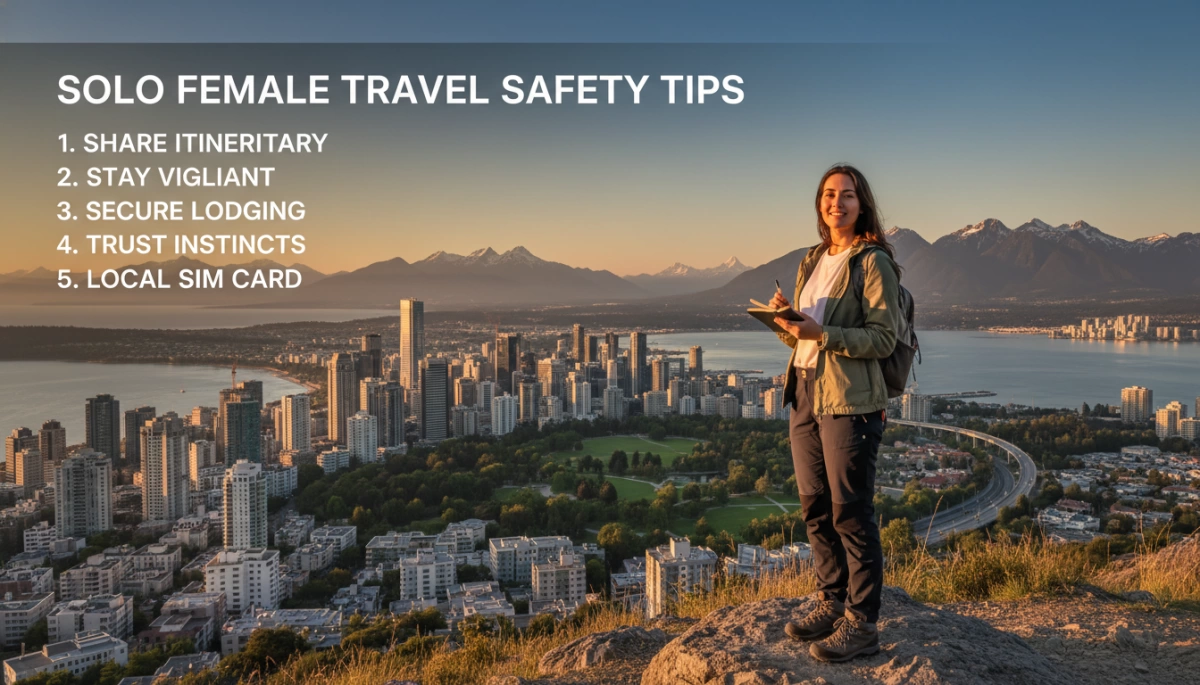
Staying safe on the road isn’t about fear; it’s about having smart systems so you can relax and enjoy the trip. Here’s how I handle solo travel safety, especially as a woman, in a simple, realistic way.
Core Solo Travel Safety Rules Everyone Should Know
These solo travel safety tips are my non‑negotiables:
-
Protect your documents
- Keep passport + cards in a money belt / hidden pouch on travel days.
- Carry printed copies of passport, insurance, and bookings in a separate spot.
- Save PDF copies in your email + cloud (Google Drive, iCloud, etc.).
-
Use the “two wallets” rule
- One small wallet with a day’s cash + 1 card.
- One backup wallet/cards hidden in your bag or locked in your room.
-
Blend in, don’t broadcast
- Skip flashy jewelry, big cameras on your neck, and designer bags.
- Don’t talk loudly about where you’re staying or show your cash in public.
-
Trust your gut, always
- If a person, street, or situation feels off, leave.
- You don’t owe anyone an explanation or politeness that risks your safety.
Solo Female Travel Safety Tips for Day and Night
Solo female travel safety is about small habits that add up:
Daytime tips:
- Dress to match local norms (Google images and hashtags before you pack).
- Sit near other women/families on buses and trains.
- Keep your bag zipped and in front of you in crowds.
- Avoid telling strangers you’re fully alone; say you’re meeting a friend.
At night:
- Set a “curfew” that matches the area. If locals aren’t out, you don’t need to be either.
- Use reputable rideshare or licensed taxis—don’t accept random rides.
- Watch your drink at all times; never leave it unattended.
- Stick to busy, lit streets, even if it’s a few extra minutes walking.
- Share your live location with someone you trust when going out.
Before You Go: Documents, Backups, and Emergency Info
Do this prep once, and it makes solo travel for beginners much calmer:
-
Documents checklist:
- Passport + visas (check expiration and entry rules).
- Travel insurance (print the policy + claim instructions).
- Driver’s license (and international permit if needed).
-
Backups:
- Scan and upload docs to a secure cloud folder.
- Email copies to yourself and a trusted person at home.
- Take photos of prescriptions, medical info, and your emergency contacts.
-
Emergency info card (physical and digital):
- Your full name and blood type (if known).
- Emergency contacts back home.
- Hotel name, address, and phone number.
- Local emergency numbers (911 equivalent) for that country.
On-the-Ground Safety Habits: Routes, Scams, and Gut Checks
When I travel alone, I rely on simple daily routines:
-
Plan routes before you leave your room
- Pin your stay and main spots on Google Maps.
- Screenshot or download offline maps, so you’re not staring at your phone in the street.
-
Avoid looking lost in public
- Step into a café, lobby, or shop to check maps.
- If you need help, ask staff, families, or women, not random men hanging around.
-
Common scams to watch for:
- “Closed” attraction scam—someone says it’s closed and steers you elsewhere.
- Overpriced taxis with no meter—agree on a price or use rideshare.
- “Accidental” spills, distractions, or forced bracelets—walk away firmly.
-
Gut check rule:
- If you feel uneasy, leave, say no, or change seats. Safety matters more than feeling rude.
Tech for Safety: Location Sharing, Rideshare Apps, and Backups
Smart solo travel apps and tools make a huge difference:
-
Location sharing:
- Share your real-time location with a trusted friend or family member.
- Text them where you’re staying and your rough plans each day.
-
Transport and rideshare:
- Use apps like Uber, Lyft, Bolt, or local equivalents where available.
- Double‑check the plate number, driver photo, and name before getting in.
- Sit in the back seat and keep your bag with you, not in the trunk if you can avoid it.
-
Phone and data backups:
- Carry a power bank and charging cable.
- Use eSIMs or local SIMs for reliable data (helpful for maps and translation).
- Turn on “Find My iPhone” / “Find My Device” and know how to lock your phone remotely.
Health and Emergency Prep: Insurance, Meds, and Local Support
Solo travel safety includes your health, not just crime:
-
Travel insurance basics:
- Get a policy that covers medical care, emergency evacuation, and trip interruption.
- Save the 24/7 emergency number in your phone and on paper.
-
Med kit for solo travelers:
- Daily meds + copies of prescriptions.
- Pain relievers, stomach meds, allergy meds, basic bandages.
- Any female-specific items you rely on (birth control, period products, etc.).
-
Know your local options:
- Map nearest hospital/clinic and pharmacy near your stay.
- Learn how to say: “I need a doctor” and any key allergies in the local language.
- In big cities, look up expat groups or U.S. embassy/consulate info in advance.
With these solo travel safety tips dialed in, you’re not traveling scared—you’re traveling prepared. That’s what lets you enjoy the real benefits of traveling alone: freedom, confidence, and peace of mind.
Solo Travel Packing List (Carry-On Focused)
When I solo travel, I stick to one carry-on and one personal item. It keeps me fast, flexible, and less stressed.
Essential Solo Travel Packing List
Clothes (mix + match):
- 3–4 t‑shirts or tanks (quick-dry if possible)
- 1–2 casual tops you’d wear to dinner
- 2–3 bottoms (1 jeans/ pants, 1–2 shorts or skirts)
- 5–7 underwear, 3–4 socks
- 1 lightweight sweater/hoodie
- 1 packable jacket (down or windbreaker)
- 1 set of sleepwear
- 1–2 workout outfits
- 1 swimsuit (even if you “might” not swim)
Shoes:
- 1 pair comfy walking shoes (sneakers)
- 1 pair sandals or flats (something you can dress up a bit)
Toiletries (TSA-friendly):
- Travel-size: toothpaste, face wash, moisturizer, sunscreen
- Solid shampoo/conditioner bar (no spills, no drama)
- Deodorant, razor, small hairbrush
- Minimal makeup + SPF lip balm
- Travel-size hand sanitizer + a few wipes
Core gear:
- Small daypack or sling bag
- Refillable water bottle
- Travel towel (quick-dry)
- Universal adapter + compact power strip
- Lightweight lock (for lockers and zippers)
- Packing cubes or compression bags
- Offline-capable phone with maps + notes apps
Light Packing Tips for Solo Travel
I pack as if I need to carry everything for 20 minutes without putting it down.
- Stick to one color palette (e.g., black/gray/white + one accent color). Everything should go together.
- Choose light, quick-dry fabrics so you can wash in the sink and rewear.
- Roll clothes or use packing cubes to keep things tight and visible.
- Use travel-size everything; you can restock in most cities.
- If you “might” need it but aren’t sure, it’s usually a no.
Must-Have Items for Safety, Comfort, and Sanity
These are my non‑negotiables for solo travel safety and comfort:
-
Money + documents setup
- Two cards (kept in different spots)
- A little cash in local + USD
- Passport + printed copy + digital backup in cloud
- Simple money belt or neck wallet for transit days
-
Safety gear
- Door-stop alarm or small portable door lock
- Tiny flashlight or headlamp
- Whistle or personal alarm
- Backup phone battery (power bank)
-
Comfort + sanity
- Earplugs + eye mask
- Thin scarf or buff (pillow, blanket, cover-up)
- Small notebook + pen (useful for directions, numbers)
- Snacks (nuts, bars) so you’re not starving and stressed
What to Skip So Your Bag Stays Light
Most first-time solo travelers overpack. I cut these:
- More than 2 pairs of shoes
- Full-size toiletries, hair tools, giant makeup kits
- “Just in case” outfits or clothes you never wear at home
- Bulky towels or extra blankets
- Heavy books (use Kindle app or audiobooks)
- Too much tech (laptop + tablet + camera + drone = overkill for most)
If it doesn’t serve a clear purpose (safety, health, daily use, or one specific activity), it doesn’t come.
How to Pack for Different Climates and Activities
I plan for layers, not separate outfits for every weather.
-
Warm destinations (Mexico, Southeast Asia, Caribbean):
- More light tops, shorts, and 1 light long-sleeve for sun/AC
- Sandals you can walk in all day
- Lightweight rain jacket
-
Cooler destinations (Europe in spring/fall, US cities in winter):
- Base layer (thermal top/leggings)
- Packable down jacket + beanie + gloves
- One extra warm layer instead of more outfits
-
If you’re hiking or doing adventure stuff:
- One set of activewear you can rewear
- Compact rain shell
- Small first-aid basics: band-aids, blister patches, pain reliever
Small Solo Travel Hacks to Stay Organized and Safe
A few solo travel hacks that make a big difference:
-
Divide and hide:
- Keep some cash + one card in a hidden spot (inside bag liner or money belt).
- Store scans of passport, cards, and insurance in secure cloud storage.
-
Color code:
- One packing cube for tops, one for bottoms, one for underwear.
- A bright pouch just for tech (cords, chargers, adapters).
-
Night-before routine:
- Every night, I put passport, wallet, keys, phone, and daypack in the same spot so I don’t panic in the morning.
-
Micro laundry kit:
- Ziploc bag, a bit of detergent, and a travel clothesline or a few clip hangers.
Packing light is one of the biggest solo travel confidence builders. When your bag is simple and dialed in, it’s way easier to stay safe, move fast, and actually enjoy the trip.
Daily Solo Travel Tips on the Road
Staying organized each day when traveling alone
When I solo travel, staying organized is what keeps everything calm and safe.
Daily solo travel routine that works:
- Start and end with a 5‑minute check‑in
- Morning: today’s main area, backup cafe, weather, cash situation
- Night: lay out clothes, refill water, charge all devices, pack day bag
- Use one “everything spot” in your room for passport, wallet, keys, phone
- Take photos of everything: hotel address, room number, parking spot, train tickets
- Keep a simple notes doc: today’s plans, confirmations, important addresses
This kind of structure makes solo travel feel less chaotic and way more confident.
Offline maps and simple tricks so you don’t get lost
You don’t need to be great with directions to travel alone confidently.
Solo travel navigation tips:
- Download offline maps (Google Maps offline areas + Maps.me) for every city
- Pin key locations:
- Hotel / hostel
- Main station / central bus stop
- A 24/7 spot (McDonald’s, gas station, hospital, police)
- Use screenshots of directions + transit routes in case your data dies
- Walk with intention: check the map before you move, not while standing confused on a corner
- If you’re turned around: step into a store, cafe, or hotel lobby and ask staff to point you back
This is one of the easiest solo travel hacks to stay safe and calm.
Eating alone without feeling weird
Eating alone is a big mental block for a lot of first time solo travelers. It doesn’t have to be.
How I make solo restaurant time feel normal:
- Pick the right spots: cafes, food halls, counters, casual spots feel easier than fancy dining
- Sit at the bar or counter – less pressure, more natural solo vibe
- Bring a “focus item”: Kindle, podcast, notes app, travel journal
- Order at busy times so you feel part of the energy, not awkward and alone in a quiet room
- Use it as planning time: review tomorrow’s solo travel itinerary, budget, or map
You’re not the only one eating alone; most people aren’t paying attention to you.
Planning solo travel days with a loose structure
A strict schedule kills the fun of solo travel. No schedule at all creates stress.
Balanced solo travel day structure:
- Pick 1–2 “must‑do” things (museum, hike, neighborhood)
- Add 1 flexible backup idea (park, cafe, free viewpoint)
- Block your day in simple chunks:
- Morning = main activity
- Afternoon = wandering / cafe / park
- Evening = food + light walk or event
- Leave buffer time so delays don’t wreck your whole plan
Loose structure keeps you organized but still spontaneous and relaxed.
Staying healthy on the road: sleep, food, water, movement
You travel better alone when your body isn’t wrecked.
Simple solo travel health rules I follow:
- Sleep: aim for 7–8 hours; use earplugs, eye mask, and a white noise app
- Water: carry a reusable bottle, refill at breakfast and every time you’re back at your room
- Food:
- Don’t skip breakfast completely; even a yogurt or banana helps
- Try local food, but balance it with something simple your body already knows
- Movement:
- Walk a lot, but stretch after long days
- Short hotel‑room routine: 5–10 minutes of bodyweight moves
Healthy basics keep solo travel from turning into burnout.
Money and documents: daily habits to avoid headaches
Losing money or documents solo is a fast way to ruin a trip. I treat this like a checklist.
Daily solo travel money and document habits:
- Never carry all your cash and cards together
- Main wallet (daily use)
- Backup card + emergency cash in a separate place (inside bag, money belt, hidden pocket)
- Use a small crossbody bag you can keep in front of you in crowds
- Take a quick money check each night:
- How much cash left?
- Do I need an ATM tomorrow?
- Any weird charges on my card?
- Keep digital backups:
- Photos of passport, ID, cards, and insurance saved in secure cloud + one offline
- Always store your passport in the same safe spot in your room, not in random day bags
These solo travel safety habits take minutes but save you from big, expensive problems later.
Meeting People While Traveling Solo
Easy ways to meet people while traveling solo
You don’t have to be super outgoing to meet people while traveling alone. I keep it simple:
- Stay where people naturally talk: hostels, social guesthouses, small B&Bs, or co-living spaces.
- Use shared spaces: hang in the common area, kitchen, or bar for 20–30 minutes a day.
- Join free or cheap activities: free walking tours, cooking classes, bar crawls, language exchanges.
- Ask low‑pressure questions:
- “Where are you from?”
- “Any food spots you liked around here?”
- “What did you do today?”
Most solo travelers are also looking to connect, so you’re not the weird one for saying hi.
Using hostels, tours, and classes for low‑key social time
For solo travel for beginners, hostels and group activities are the easiest “social shortcuts”:
-
Hostel tips for solo travelers
- Book smaller dorms (4–6 beds) or a private room in a hostel for the social vibe without chaos.
- Join hostel events: family dinners, game nights, pub crawls, coworking hours.
- Sit at shared tables; don’t hide on your bunk all night.
-
Group tours & classes
- Half‑day city tours, day trips, food tours, and cooking classes are perfect for casual interaction.
- Pick small group tours (max 12–15 people) so it’s easier to talk.
- Sports/activities: surf lessons, yoga, hiking groups, dance classes – easy icebreakers without small talk pressure.
These options give you built‑in structure and let you be social without planning everything yourself.
Best solo travel apps and platforms to meet people
I rely on a few solo travel apps and tools to connect safely:
- Hostelworld – check reviews to find social hostels, see if they host events.
- Meetup – local events (hikes, language exchange, board games, tech meetups) in most big cities.
- Eventbrite – free and paid local events, workshops, and classes.
- Bumble For Friends or Hey! VINA (women only) – meet other travelers or locals platonically.
- Facebook groups – “Digital Nomads in X,” “Backpacking X,” “Solo Travel for Women” – great for quick meetups or questions.
Always meet in public places, check reviews of venues, and trust your gut if someone feels off.
Solo travel for introverts: enjoying people and alone time
If you’re introverted, you can still enjoy meeting people while traveling solo without draining yourself:
- Choose sociable but calm environments: quiet hostels, cafes, coworking spaces, small group tours.
- Aim for 1 social thing a day: a walking tour, a coffee with someone from Meetup, or a hostel dinner.
- Give yourself permission to leave early. You don’t owe anyone a full night out.
- Use solo‑friendly activities that can turn social: photography walks, museums, cafes with shared tables.
You’re not “doing solo travel wrong” if you like staying in, reading, or wandering alone. That’s the point of solo travel.
How to say no and set boundaries (and still be friendly)
You can be polite and still protect your energy and safety:
-
Simple “no” phrases
- “I’m heading back, but have fun tonight.”
- “I’m doing my own thing tomorrow, maybe I’ll see you around.”
- “Thanks, but I’m going to chill tonight.”
-
Hard boundaries
- No sharing your room number or full itinerary with strangers.
- No letting people you just met hold your bag, phone, or drink.
- No feeling bad for leaving a situation that feels off.
Respectful people will respect your boundaries. If they don’t, that’s your red flag.
Staying safe while socializing and going out alone
Solo travel safety doesn’t stop when the sun goes down. A few non‑negotiables I follow:
- Meet in public, busy places only.
- Share your live location with a trusted friend or family member (or use apps like Find My / Life360).
- Set a “soft curfew” for yourself, especially in a new city.
- Watch your drink at all times; don’t accept already‑opened drinks from strangers.
- Use reputable rideshare apps (Uber, Lyft, Bolt, etc.) or official taxis; check the plate before getting in.
- Keep a backup plan:
- Offline map downloaded
- Hotel/hostel address saved
- Enough cash/card for a ride home
You can have a good time, meet great people, and still treat solo travel safety as non‑negotiable. That balance is what lets you enjoy the trip without stress.
Dealing with Loneliness and Tough Moments in Solo Travel
Solo travel looks amazing on Instagram, but in real life there are quiet nights, bad days, and moments where you question why you came alone. That’s normal. I build for that on purpose, not pretend it doesn’t exist.
Overcoming Loneliness in Solo Travel (Without Forcing Friends)
You don’t need to become a “super social” traveler to handle loneliness:
- Change your environment, not your personality
- Work from a café instead of your room
- Read a book in a park or hostel common area
- Take a walking tour where small talk happens naturally
- Choose “light connection” over instant best friends
- Ask staff for a food recommendation
- Chat with your rideshare driver
- Join a small group activity (cooking class, day tour, meetup)
- Use tech in a smart way
- Schedule regular calls with 1–2 close people back home
- Share quick photo updates instead of doom-scrolling
The key solo travel mindset tip: you’re not failing if you have lonely moments. You’re just human.
Simple Solo Travel Routines to Keep Things Manageable
Small routines make solo travel for beginners and experienced travelers feel less overwhelming:
- Morning reset (10–15 minutes)
- Check maps, weather, and one or two priorities for the day
- Quick stretch, water, and a real breakfast
- Daily “anchor”
- One fixed plan: a museum, a café you want to try, sunset at a viewpoint
- Everything else stays flexible
- Evening wind‑down
- Put chargers, passport, wallet in the same exact spot every night
- Note tomorrow’s first move (breakfast spot, bus time, or first walk)
These routines cut decision fatigue so you have more energy to enjoy the benefits of traveling alone.
What to Do on Bad Days: Anxiety, Homesickness, Decision Fatigue
Bad days hit everyone, especially on first time solo travel:
- If you’re anxious
- Get outside and walk in a busy, safe area
- Do one easy, familiar thing: coffee, comfort food, or a gym session
- Break tasks into tiny steps: “Book tonight’s room” → then stop
- If you’re homesick
- Call or video chat with someone who actually calms you
- Do a “home” ritual: same music, same snack, same show
- If you’re burned out on decisions
- Pick the simplest option: eat nearby, stay close to your hotel
- Use apps like Google Maps “Nearby” or Tripadvisor and go with the top decent choice, not the “perfect” one
Bad days don’t mean solo travel isn’t for you. They just mean you’re out of your comfort zone, which is where growth happens.
Mindset Shifts: Turning Hard Moments Into Growth
A strong solo travel mindset is what keeps you going:
- Reframe the story
- “I’m lost” → “I’m learning a new place.”
- “I’m alone” → “I’m free to do what I want today.”
- Measure wins correctly
- Win = you figured it out, not that everything went smoothly
- Win = you set a boundary, changed plans, or asked for help
- Document it
- Write one line each night: “Today I learned…”
- You’ll see your confidence building trip by trip
This is how solo travel confidence builds quietly in the background.
When to Slow Down, Change Plans, or Take a Rest Day
A big part of solo travel safety and sanity is knowing when to stop pushing:
Signs you need to slow down:
- You’re snapping at people over small things
- You’re rushing through bucket‑list spots without caring
- You’re waking up exhausted even after sleep
Your options:
- Take a full rest day
- Stay in, watch something, order food, do laundry
- No guilt. Recovery is part of the trip.
- Cut or adjust your route
- Drop one city and stay longer where you feel good
- Choose one “must‑do” per day instead of five
- Upgrade for one night
- Move from hostel dorm to a private room or quieter guesthouse
- Give your brain and body a reset
Solo travel isn’t about proving how much you can handle. It’s about learning how to listen to yourself, make smart adjustments, and keep going in a way that feels sustainable.
Handling Problems and Travel Mishaps Alone
Common solo travel problems and quick fixes
Stuff goes wrong. That’s normal. What matters is how fast you reset.
Common solo travel mishaps + quick fixes:
- Missed trains/buses
- Go straight to the ticket counter, not the line of confused tourists.
- Say: “I missed my train. Next available?” and show your ticket.
- Use apps like Omio, Trainline, or Rome2Rio to find backup routes.
- Wrong stop / wrong direction
- Get off at the next stop. Do not panic.
- Open offline maps (Google Maps downloaded) and check your location.
- Ask staff: “I need to go to [place]. Which direction?” and show it on your phone.
- Canceled flights
- Immediately get in the airline’s app or website while you stand in line.
- Check credit card travel protection and travel insurance for coverage.
- Be flexible with nearby airports or next‑day flights.
Stay calm, solve one problem at a time, and remember: nearly every traveler has been there.
What to do if you get sick or hurt traveling alone
You need a simple solo travel safety plan for health:
- Before you go
- Buy travel health insurance that covers ER visits, urgent care, and evacuation.
- Save your policy number and emergency phone in your phone and on paper.
- If you get mildly sick
- Go to a pharmacy first. Pharmacists in many countries are very helpful.
- Focus on: water, simple food, sleep, electrolytes.
- If you’re hurt or seriously sick
- Ask your hotel/hostel: “Where is the nearest hospital or urgent care?”
- Use Google Maps reviews to find a clinic popular with tourists or expats.
- Contact your insurance via app/phone for guidance and reimbursement rules.
Don’t tough it out alone if something feels serious. Get help early.
How to ask for help when you don’t speak the language
You don’t need to be fluent. You just need a system.
- Use Google Translate (download offline language packs).
- Keep key phrases saved:
- “Please help.”
- “Hospital / pharmacy.”
- “I am lost. I need to go here.” (show address/booking)
- Show people:
- A map pin on your phone.
- Screenshots of your hotel name and address.
- Go to safe helpers first:
- Hotel front desk
- Station staff / info desk
- Police booth
- Big chain cafés or restaurants
Point, show, and use simple words. Most people want to help.
Backup plans for money, cards, and phones
Solo travel safety means assuming tech and cards will fail at some point.
Money + cards:
- Carry:
- 2 debit cards (different banks) + 1–2 credit cards.
- Keep one card in your wallet, one hidden in your bag.
- Store:
- A small amount of emergency cash (USD + local currency), in a separate spot.
- If your card is lost or blocked:
- Freeze it in your banking app.
- Call the bank using Wi‑Fi calling or Skype.
- Use Western Union / Wise if someone at home needs to send you cash.
Phone + tech:
- Always have:
- Paper copies of your hotel address and flight details.
- Important numbers written down (hotel, airline, bank).
- If your phone dies or is stolen:
- Use a hostel/hotel computer or front desk phone.
- Log into your email to access bookings and backups.
- Turn on Find My iPhone / Find My Device before you leave home.
Think like this: “If I lost my wallet and phone today, could I still get cash, get home, and access my bookings?” Set up your systems so the answer is yes.
Turning solo travel mishaps into lessons
Every solo travel mishap is data you can use.
After something goes wrong, ask:
- What could I have done to make this easier?
- Downloaded offline maps?
- Saved tickets and addresses offline?
- Built more time between connections?
- What will I change next time?
- Pack a small backup card.
- Take earlier trains, not the last one of the day.
- Screen‑grab all tickets and confirmations.
Write quick notes in your phone at the end of tough days. That’s how you quietly build solo travel confidence and turn mistakes into better future trips.