Why Practical Storage Matters in Every Room
If your home constantly feels messy—even when you “just cleaned”—you don’t have a clutter problem, you have a storage problem.
Most of us are dealing with:
- Small spaces where every inch has to work hard
- Busy family schedules that leave no time for complicated systems
- Limited closets that overflow the second a new season starts
Without smart, practical storage, everyday stuff has nowhere to land. That’s when counters, floors, and furniture turn into dumping grounds.
How Smart Storage Changes Everything
When you dial in the right home organization ideas and room-by-room storage solutions, everything gets easier:
- You can see what you own, so you stop buying duplicates
- You save time because things actually have a home
- Rooms feel bigger, calmer, and less chaotic
- Family members know where things go, so you’re not the only one putting stuff away
The goal isn’t perfection. It’s creating clever storage hacks that work on real-life, busy days.
Modern Storage Trends That Actually Help
Today’s best small space organization is:
- Hidden – under-bed drawers, storage ottomans, and over-the-toilet shelving
- Multifunctional – furniture that doubles as storage, like benches and beds with built-in drawers
- Design-forward – storage furniture for small spaces that looks sleek, not bulky
I focus heavily on multifunctional furniture, vertical storage ideas, and budget-friendly organizers that look good and work hard.
How to Quickly Assess Your Space
Before you buy a single bin, take five minutes to look at your space like a problem to solve:
-
Spot the clutter hot spots
- Where do piles always form? (entryway, coffee table, kitchen counter)
- What items are always left out? (backpacks, shoes, mail, toys)
-
Check your vertical space
- Walls, backs of doors, space above toilets, and under beds are prime DIY home storage zones.
-
Match storage to habits
- If shoes always end up by the door, don’t fight it—add a basket or low shelf right there.
- If mail lands on the counter, create a simple tray or inbox in that exact spot.
Once you see the patterns, you can build family-friendly storage ideas that fit your real life—not some staged photo.
Kitchen Storage Ideas: Maximize Every Cabinet
In most U.S. homes, the kitchen is prime real estate, so every inch of cabinet space has to work hard. I design kitchen storage ideas to make deep cabinets, awkward corners, and small spaces feel easy to use every day.
Smart cabinet storage solutions
-
Install pull-out shelves & slide-out trays
- Use full-extension pull-out drawers in lower cabinets so you can see everything at once.
- Add slide-out trays for pots, small appliances, and heavy items so you’re not digging in the dark.
- These are one of the best small space organization upgrades you can make without a full remodel.
-
Add tiered racks for pots, pans, and pantry staples
- Use tiered shelf risers for canned goods, spices, and jars so labels are always visible.
- Add pan and lid racks inside cabinets to stack vertically instead of piling everything in a noisy heap.
- This simple DIY home storage move saves time when you’re cooking on busy weeknights.
-
Use vertical dividers for baking sheets and boards
- Stand baking sheets, cutting boards, and trays upright using vertical dividers in a lower cabinet.
- Slot-style organizers near the oven or prep area keep everything within reach.
- It’s a clean, minimalist home organization trick that makes your cabinets feel custom.
-
Hang organizers on cabinet doors
- Use over-the-door or screw-in organizers on the inside of cabinet doors for wraps, foils, zip bags, and cleaning supplies.
- Keep chemicals on higher doors if you have kids or pets.
- Door storage is one of the easiest clever storage hacks to add more space without new cabinets.
These room by room storage solutions start in the kitchen, but the mindset is the same across the whole home: go vertical, pull things forward, and make sure you can see what you own.
Pantry Organization: See Everything at a Glance
When I organize a pantry, my goal is simple: you should be able to see what you have in 3 seconds. Smart pantry organization saves money, cuts food waste, and keeps weeknight dinners easier.
Use Lazy Susans for Oils, Sauces, and Condiments
Turntables are one of my favorite kitchen pantry organization hacks:
- Put oils, sauces, and condiments on lazy Susans so nothing gets lost in the back.
- Use one for cooking oils and vinegars, another for dressings and hot sauces.
- Choose sturdy, wipeable materials so cleanup is easy after spills.
Clear, Stackable Pantry Storage Bins
Seeing everything at a glance is the key to small space organization:
- Use clear, stackable bins for snacks, pasta, rice, and baking supplies.
- Go for uniform sizes so they stack neatly on standard U.S. pantry shelves.
- Keep kids’ snacks in shallow bins on a lower shelf so they can grab and put back on their own.
Label Every Bin and Container
A simple labeling system for home makes your pantry basically run itself:
- Label by category, not brand: “Snacks,” “Pasta & Rice,” “Baking,” “Breakfast.”
- Use clear, bold labels so anyone in the family can find (and return) items fast.
- Stick to one label style for a clean, minimalist home organization look.
Create Easy Zones in Your Pantry
Zones turn a messy pantry into a room-by-room storage solution:
- Baking zone: flour, sugar, chips, baking powder, vanilla.
- Snack zone: chips, bars, fruit snacks, nuts.
- Canned goods zone: soups, beans, tomatoes, sauces.
- Breakfast zone: cereal, oatmeal, pancake mix, syrup.
Set it up once, label it well, and your pantry storage system will stay organized with just a quick weekly reset.
Living Room Storage: Hide the Everyday Clutter
Living rooms in the U.S. work hard – TV time, kids’ toys, work-from-home, guests. If I don’t build in storage, it turns into a pile fast. Here’s how I set up living room storage so it still looks clean and intentional.
Smart storage furniture for small spaces
| Storage Idea | How I Use It | Best For |
|---|---|---|
| Ottoman with hidden storage | Toss in blankets, pillows, extra throws before guests come over. | Small apartments, family rooms |
| Storage coffee table (shelves or lift-top) | Top lifts for laptops and homework, bottom shelf holds baskets. | Work-from-home, kids’ activities |
| Baskets & bins | One for remotes, one for toys, one for magazines/books. | Family-friendly homes |
| Media unit with doors | Hide game consoles, routers, cables, extra remotes. | TV rooms, open-concept spaces |
Clever living room clutter solutions
-
Pick multifunctional furniture
- Storage ottomans instead of regular ones
- Coffee tables with drawers, shelves, or lift-top storage
-
Use baskets as “quick clean-up” zones
- One basket per big category: toys, blankets, magazines, remotes
- Go for woven or fabric baskets that match your decor
-
Conceal electronics and cables
- Media units with doors, cord cutouts, and cable trays
- Label power strips and use cable clips so cords don’t hang everywhere
With the right room by room storage solutions in the living room—hidden ottomans, storage coffee tables, baskets, and closed media units—you get a space that looks calm on the surface, even when real life is busy behind the scenes.
Entryway Storage Ideas: Control the Drop Zone
Your entryway is prime real estate. If you don’t control it, it turns into a clutter trap fast. I treat this area like a mini command center with simple, practical home organization ideas that anyone can keep up with.
Wall-Mounted Hooks and Racks
Install multi-hook wall racks so everything has a landing spot the second you walk in:
- Use double or triple hooks for coats, backpacks, purses, and dog leashes
- Add a separate small hook strip for keys, lanyards, and umbrellas
- Mount hooks low for kids so they can hang their own stuff
This kind of wall mounted storage gets things off the floor and keeps the entry clear.
Shelves, Cubbies, and Vertical Storage
Go vertical to save floor space, especially in smaller U.S. homes and apartments:
- Add wall-mounted shelves or cubbies above hooks for hats, gloves, and sunglasses
- Use cubbies below hooks for shoes, sports gear, and kids’ backpacks
- Mix vertical storage ideas like peg rails and slim wall shelves to fit tight spaces
Baskets, Trays, and Everyday Essentials
Contain the daily chaos with simple budget-friendly organizers:
- Use baskets or trays by the door for shoes, flip flops, and boots
- Add a small tray or bowl for mail, wallets, keys, and sunglasses
- Choose clear storage containers or open baskets so you can see everything at a glance
Individual Zones for Every Family Member
In busy American households, family-friendly storage ideas are what actually stick:
- Give each person a hook + cubby + basket
- Label each area with their name for quick, no-arguments cleanup
- Keep daily-use items (work bag, school backpack, sports gear) in that person’s zone
This kind of room by room storage solution turns the entry from a drop zone into a system you can maintain in under a minute a day.
Bedroom Storage Ideas: Use Under-Bed Space Smartly
Under-bed space is prime real estate, especially in small bedrooms and apartments. I treat it like a built-in storage unit, not a random dumping zone.
Under Bed Storage Ideas That Actually Work
Best things to store under the bed:
- Off-season clothes
- Extra linens and blankets
- Bulky bedding (comforters, duvets, pillows)
- Backup items you don’t need every day
Avoid storing: daily-use clothes, shoes you grab all the time, or anything you need in a hurry. That just leads to frustration.
Smart Under-Bed Storage Options
| Storage Idea | Best For | Why It Works for Home Organization |
|---|---|---|
| Under-bed rolling drawers / wheeled bins | Clothes, linens, kids’ extras | Easy to pull out, great for small space organization |
| Vacuum-seal bags | Bulky bedding, off-season clothing | Compresses volume, budget-friendly, fits in low beds |
| Storage beds (drawers or lift-up base) | Apartments, primary bedrooms | Built-in, hidden storage, perfect multifunctional furniture |
| Low-use item zone | “Sometimes” items, not daily essentials | Keeps everyday bedroom storage simple and calm |
Bedroom Storage Tips: Keep It Simple
- Label everything: Clear labels on bins or drawers so you can find things fast.
- Group by category: One bin for winter clothes, one for guest bedding, etc.
- Stick to low-use items under the bed to keep your daily routine smooth.
These bedroom storage ideas and under bed storage ideas help you declutter every room, but especially the bedroom, so it feels bigger, calmer, and easier to maintain.
Closet Organization: Double Your Hanging Space
If you’re tired of digging through packed rods and wrinkled clothes, dial in your closet organization and let it actually work like a mini boutique.
Double your hanging space fast
- Install double-hang rods
- Top rod: blouses, shirts, shorter jackets
- Bottom rod: pants, skirts, shorts
- This instantly doubles your hanging space in most standard closets, which is huge for small space organization and apartment living.
Use better hangers, not more hangers
- Slim, non-slip hangers
- Save inches per garment compared to bulky plastic or wood
- Keep strappy tops, silk pieces, and light knits from sliding off
- Create a clean, uniform look that makes the closet feel bigger and calmer
Control shelves instead of stacking chaos
- Add shelf dividers for:
- Sweaters (no more leaning piles)
- Jeans (stand them upright “file style”)
- Bags (keep them upright and protected)
- This is an easy DIY home storage upgrade that works in both walk-in and reach-in closets.
Add vertical storage for shoes and extras
- Use hanging organizers
- Shoes: sneakers, sandals, flats
- Accessories: scarves, hats, belts, small bags
- Folded items: tees, workout gear, kids’ clothes
- These are budget-friendly organizers that make use of dead vertical space and keep daily items at eye level.
Dialing in these simple closet storage ideas gives you more usable space without a remodel and keeps your daily routine faster and less stressful.
Bathroom Storage: Go Vertical and Over the Toilet
Smart vertical bathroom storage ideas
In most U.S. homes, the bathroom is one of the smallest rooms, so I always go up the wall instead of spreading out.
Over-the-toilet storage that actually works
Use that dead space over the toilet for real storage, not just decor:
| Solution | Best For | Why It Works |
|---|---|---|
| Over-the-toilet shelving unit | Towels, toilet paper, extra toiletries | Uses vertical space without taking floor room |
| Floating shelves above the toilet | Everyday items in baskets | Easy to clean, looks modern and light |
| Cabinet over the toilet | Medication, backups, “visual clutter” | Doors hide messy items and keep things safe |
Quick setup tips:
- Keep daily-use items at eye level, backups higher.
- Store toilet paper and hand towels in easy-reach baskets.
Narrow carts and corner shelves
Tight bathroom? I rely on slim, movable storage:
- Narrow rolling cart between toilet and vanity or washer:
- Top: daily products (lotions, toothbrush holder, face wash)
- Middle: hair tools and products
- Bottom: extra TP and cleaning supplies
- Corner shelves in unused corners:
- Great for small space organization in apartments and older U.S. homes
- Use for plants + baskets so it still looks clean, not cluttered
Under-sink baskets and bins
Under the sink is prime real estate. Don’t toss things in loose:
- Use stackable bins or pull-out baskets to create “drawers”
- Group by type:
- Cleaning products
- Hair tools and products
- Skincare and daily essentials
- Guest supplies (extra toothbrushes, mini toiletries)
Matching containers keep it clean-looking
Visual clutter makes a small bathroom feel even smaller. I always:
- Use matching baskets or clear storage containers under the sink
- Stick to 2–3 colors/materials max (for example: white plastic + clear acrylic)
- Add simple labels:
- “Hair,” “Skincare,” “Cleaning,” “First Aid”
This kind of bathroom storage setup is budget-friendly, renter-friendly, and easy to maintain, even with a busy family schedule.
Bathroom Vanity and Under-Sink Organization Ideas
When I design bathroom vanity and under-sink organization systems, I treat that space like prime real estate. It has to work hard, stay clean, and be easy to reset in a few minutes.
Use Drawer Organizers for Daily Products
Turn junk drawers into clear, grab-and-go stations:
- Add drawer organizers for makeup, skincare, and hair products.
- Separate by category: everyday makeup, special-occasion makeup, daily skincare, hair tools, hair products.
- Use shallow trays so you can see everything at a glance instead of digging.
- Stick to clear storage containers so you instantly know what’s running low.
This kind of setup is one of the simplest but most effective bathroom storage tips you can use in a small space.
Add a Tension Rod Under the Sink
Under-sink cabinets are awkward, but a cheap tension rod turns dead space into smart storage:
- Hang spray bottles (cleaners, glass spray, multipurpose) from their triggers on the rod.
- Keep the bottom area free for bins and drawers.
- Use vertical space instead of piling everything on the cabinet floor.
This is one of those clever storage hacks that works in almost every U.S. home, especially apartments and smaller bathrooms.
Use Tiered Shelves or Stackable Drawers
Under the sink, I like to build “levels” so nothing gets lost in the back:
- Add tiered shelves or stackable drawers around the plumbing.
- Use drawers for extra toiletries, backup toothpaste, and bulk items from Costco or Target.
- Keep smaller items in labeled bins so you’re not hunting for razors or cotton rounds.
This is a core small space organization move: go vertical and keep everything contained.
Create Daily-Use and Backup Zones
To keep clutter from creeping back, create clear zones:
- Daily-use zone (front and center):
- Toothbrushes, everyday skincare, deodorant, hairbrush, basic makeup.
- Store in a top drawer, countertop caddy, or front bin.
- Backup/product overflow zone (back or lower areas):
- Extra shampoo, unopened skincare, travel sizes, stock-up deals.
- Store in labeled bins or drawers under the sink.
Label each zone so the whole family puts things back where they belong. This simple labeling system for home is what keeps your bathroom vanity and under-sink organization from falling apart after a week.
These bathroom organization ideas are budget-friendly, renter-friendly, and designed to fit real U.S. homes—whether you’re working with a single tiny vanity or a double-sink setup in the suburbs.
Home Office Storage: Clear the Desk, Clear the Head
If you work from home, you know clutter kills focus. Smart home office storage keeps your desk clear, your head calm, and your day smoother.
Wall-Mounted Storage & Pegboards
Use wall mounted storage to get stuff off your desk:
- Install a wall-mounted pegboard above or beside your desk
- Hang scissors, headphones, tape, chargers, and tools
- Add small cups and hooks for pens, Post-its, and keys
- This is a great DIY home storage project and perfect for small home offices and apartments
Floating Shelves for Books and Decor
Go vertical with floating shelves instead of bulky bookcases:
- Store books, binders, and reference files on upper shelves
- Keep one lower shelf for decor: plants, a photo, or a small lamp
- Use matching bins on shelves to hide odds and ends and keep a minimalist look
File Boxes and Paper Control
Paper is what usually takes over a home office:
- Use file boxes or magazine holders for:
- Bills and mail
- Important documents you need to grab fast
- Label them clearly: “To Pay,” “To File,” “Taxes,” “Kids’ School,” “Business”
- This keeps your home organization system simple and easy to maintain
Cable Management Systems
Messy cords make even a clean desk feel chaotic:
- Use cable clips, cable sleeves, and under-desk cable trays
- Label both ends of every cord: “Monitor,” “Printer,” “Laptop,” “Charger”
- Mount a power strip under your desk to get cords off the floor
- This is a small clever storage hack that makes your home office look tidy and professional on video calls
With the right home office storage ideas—pegboards, floating shelves, file boxes, and cable management—you create a workspace that actually supports work, not clutter.
Kids’ Room Storage Ideas: Tame Toys and Tiny Things
Toy Rotation Bins = Less Mess, Less Stress
If you’ve got kids, you know toys multiply overnight. I use toy rotation bins as a simple, family-friendly storage hack:
- Split toys into 3–4 clear storage bins.
- Keep one bin out, store the rest in a closet or under the bed.
- Rotate weekly or bi-weekly so toys feel “new” without buying more.
This kind of small space organization keeps the floor clear and makes cleanup faster for both kids and parents.
Labeled, Stackable Toy Bins by Category
For everyday toy storage solutions, I stick to labeled, stackable bins:
- One bin for LEGO, one for cars, one for dolls, one for art, etc.
- Use picture + word labels so even toddlers know what goes where.
- Choose sturdy plastic bins that stack safely on shelves or in closets.
This is a simple, budget-friendly organizer system that works in real family homes across the U.S.
Low, Open Shelving Kids Can Reach
If kids can’t reach it, they can’t put it away. I always recommend:
- Low, open shelving for books, puzzles, and daily toys.
- Bins or baskets on the bottom shelves for quick toy toss-in.
- Rounded edges and stable units that can be anchored to the wall.
This kind of family-friendly storage teaches independence and keeps your living room from becoming the playroom.
Over-the-Door Organizers for Tiny Things
For all the tiny pieces that usually end up under the couch, I use over-the-door organizers as a clever storage hack:
- Use clear pockets for small toys, hair accessories, LEGO sets, or craft supplies.
- Hang on the bedroom door, closet door, or playroom door.
- Label each row (crafts, action figures, “party favors,” etc.).
It’s vertical storage that doesn’t eat up floor space and makes it easy to see everything at a glance.
In kids’ rooms, the goal is simple: less clutter, faster cleanup, and systems kids can actually use.
Garage and Basement Storage: Get It Off the Floor
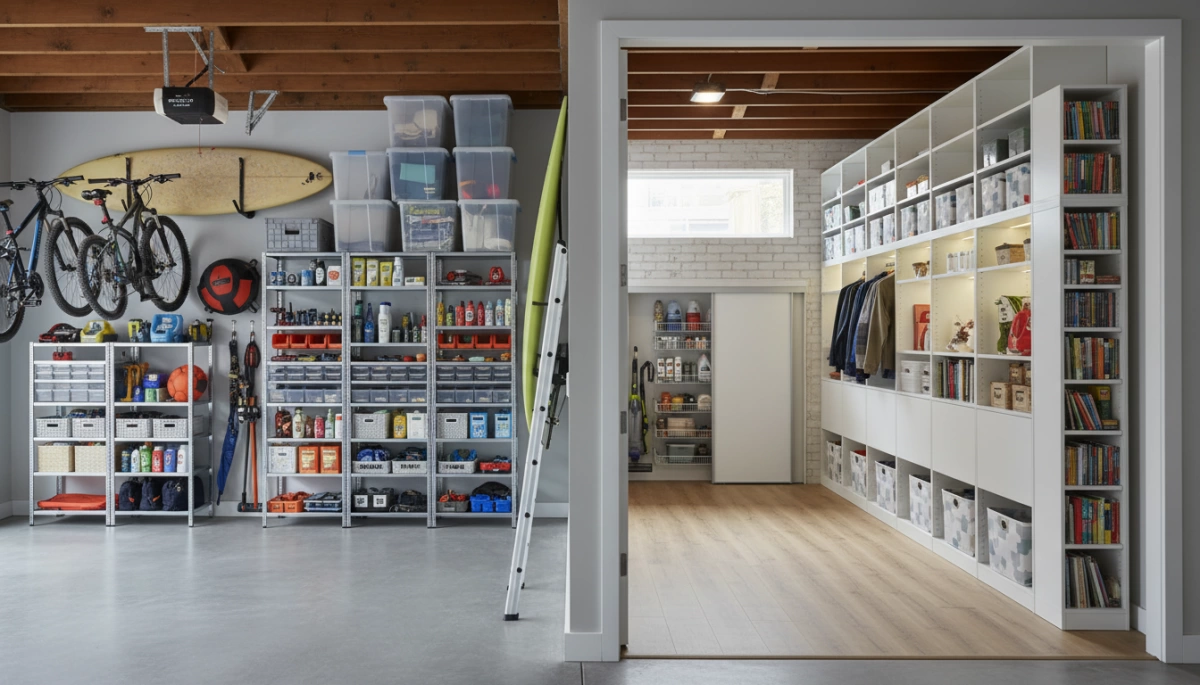
When I organize a garage or basement, my main rule is simple: nothing lives on the floor unless it has wheels. Getting things up and off the ground instantly makes the space safer, cleaner, and easier to use.
Vertical garage storage systems
Go vertical with slatwall or track systems. They’re perfect for US homes where the garage pulls double duty as storage and a workshop.
- Mount vertical slatwall panels or track systems on open walls
- Clip on hooks, baskets, and shelves for tools, extension cords, hoses, and yard gear
- Shift hooks around as seasons change—snow shovels in winter, rakes in fall
- This kind of wall mounted storage keeps everything visible and off the concrete
Heavy‑duty hooks and racks
For bigger gear, you need heavy-duty garage storage systems that can handle real weight.
- Use heavy-duty hooks and wall racks for bikes, ladders, strollers, and sports equipment
- Mount into studs or use proper anchors—don’t trust cheap peel-and-stick options
- Hang bikes vertically if you’re short on space or horizontally if you have a wider wall
- Keep frequently used items (kids’ bikes, daily ladders) at an easy grab height
Shelving units and clear storage bins
If you want small space organization that still feels open, go with shelves plus clear bins.
- Add freestanding metal shelving units along one wall
- Use clear storage containers and stackable bins for seasonal decor, camping gear, holiday lights, and bulk paper goods
- Put lighter items on top shelves, heavier bins at the bottom
- This is one of the most budget-friendly organizer setups you can build in a weekend
Labeling system for fast find
Labels turn random storage into a real room by room storage solution that actually works long-term.
- Label every bin clearly: “Christmas Lights,” “Camping,” “Fall Decor,” “Snow Gear”
- Use large, bold labels you can read from a distance
- Keep similar categories together on the same shelf for easy decluttering later
- A simple labeling system for home saves time every time you walk into the garage
When you treat your garage and basement as real storage zones and get everything off the floor, you protect your stuff, cut the clutter, and gain back usable space for your car, your projects, and your family.
Laundry Room Storage: Make Chores Less Messy
Smart laundry room storage makes a boring chore way easier. I focus on simple, practical home organization ideas that work in real U.S. homes—small laundry closets, basement setups, or a corner in the hallway.
Vertical laundry room organization
Use your walls so the floor stays clear:
- Wall-mounted hanging rods:
- Install a rod above the washer, dryer, or a counter.
- Perfect for air-drying clothes, hanging shirts straight from the washer, and keeping “wear again” items off chairs.
- Go for metal or wood rods that can handle damp clothes and daily use.
Sorting systems that save time
Set up room by room storage solutions that your whole family can actually follow:
- Separate baskets or hampers for:
- Lights
- Darks
- Delicates
- Use labeled laundry hampers or color-coded baskets so kids and partners can sort as they go.
- This is a simple declutter every room move that cuts sorting time in half on laundry day.
Use the space above appliances
Most U.S. homes waste the wall space above the washer and dryer:
- Add sturdy shelves or wall cabinets above the machines for:
- Detergents and stain removers
- Dryer sheets and wool balls
- Cleaning supplies and extra rags
- Use clear storage containers or bins and label them for a clean, minimalist home organization look.
Narrow carts and small space organization
If your laundry room is tight, lean on clever storage hacks:
- Slide a narrow rolling cart between appliances or beside a wall.
- Store:
- Detergent, bleach, and softener
- Stain sprays and dryer sheets
- Clothespins and mesh laundry bags
- This is one of the best small space organization tricks—everything is within reach but still looks tidy.
These laundry room organization ideas keep your space functional, family-friendly, and less stressful, even if your “laundry room” is just a small closet off the hallway.
Dining Area Storage: Stylish but Functional
When I set up dining area storage, I always treat it like a mix of home organization and display space. You want it to look good but also work hard every day.
Choose the Right Sideboard or Buffet
Pick storage furniture for small spaces that does double duty:
| Feature | Why it matters for U.S. homes |
|---|---|
| Drawers + cabinets combo | Easy to separate linens, utensils, and bulky dishes |
| Adjustable shelves | Fits tall platters, pitchers, and serving bowls |
| Closed doors | Hides visual clutter, keeps a clean, minimalist look |
| Sturdy top surface | Space for decor, drink station, or holiday buffet setup |
I always choose pieces with hidden storage over open shelving in dining areas. It keeps the room calm and less visually busy.
Store Linens the Smart Way
Use those shallow drawers for all the small, soft items:
- Table linens: tablecloths, runners, seasonal cloths
- Napkins: cloth napkins sorted by color or occasion
- Placemats: stacked flat so they don’t warp
- Everyday vs. special-occasion: keep daily-use items in the top drawers, fancy items lower down
To keep it neat, I like using simple drawer organizers or folding dividers so stacks don’t slide around every time you open the drawer.
Use Cabinets for Bulky and Occasional Items
Cabinet space is perfect for dining room clutter solutions:
- Serving dishes and platters
- Large bowls and pitchers
- Holiday and special-occasion pieces
- Backup glassware or extra place settings
Quick system I use:
| Shelf Level | What I Store There |
|---|---|
| Eye level | Go-to serving dishes and everyday hosting pieces |
| Lower shelves | Heavy platters, large bowls, small appliances |
| Upper shelves | Rarely used holiday and seasonal items |
Clear labels on the inside of doors help a ton when you’re hosting and people are helping you put things away.
Style the Top, Hide the Everyday
The top of your sideboard or buffet should stay styled but practical:
- Use a tray to corral salt/pepper, candles, or a small vase
- Add one or two decor pieces (art, lamp, plant) so it feels finished
- Keep mail, keys, and random stuff off this surface—those belong in entryway storage, not your dining zone
My rule:
Everyday functional items live inside. The top stays mostly clear so it’s ready for serving when guests come over.
This setup gives you room-by-room storage solutions that look intentional, keep clutter hidden, and make your dining area feel pulled together without feeling fussy.
Multi-Use Furniture for Whole-Home Storage
When space is tight, multi-use furniture becomes your best storage hack. I design and buy pieces that look good and quietly hide the mess.
Storage furniture for small spaces
| Furniture Piece | Hidden Storage Use | Best Room |
|---|---|---|
| Storage bed | Off-season clothes, extra bedding, luggage | Bedroom |
| Storage bench | Shoes, bags, sports gear, blankets | Entryway, living room |
| Storage ottoman | Toys, throws, remotes, gaming gear | Living room, playroom |
| Coffee table w/ drawers | Magazines, chargers, coasters, controllers | Living room |
| Side table w/ shelf | Books, remotes, small baskets | Bedroom, living room |
| TV stand w/ doors | Cables, game consoles, routers, DVDs | Living room, media room |
Clever storage hacks with multi-use furniture
-
Use storage beds
- Go for drawers or a lift-up base for easy access.
- Store rarely used, bulky items: comforters, pillows, seasonal clothes.
-
Add benches and ottomans with hidden compartments
- Put one in the entryway for shoes and bags.
- Use one in the living room for blankets, toys, and board games.
-
Pick coffee tables and side tables with shelves or drawers
- Keep daily clutter off the surface but still within reach.
- Use small clear storage containers or baskets inside the drawers.
-
Choose TV stands and consoles with doors
- Hide electronics, cables, and games behind closed doors.
- Run a simple cable management system in the back to cut visual clutter.
How I prioritize multi-functional pieces
In a typical U.S. home—especially apartments, townhomes, and smaller suburban houses—I always:
-
Skip “pretty but useless” furniture.
If it doesn’t add storage, it’s low on my list. -
Favor double-duty designs.
- Bench + shoe rack
- Ottoman + toy storage
- Bed + dresser drawers underneath
-
Stick to a neutral, cohesive look.
Matching finishes make all this extra storage feel intentional, not cluttered.
Multi-use furniture is the fastest way to add whole-home storage without feeling like you live in a storage unit.
Whole-Home Systems: Labels, Containers, and Habits
Use labels everywhere
If you want home organization ideas that actually stick, clear labels are non‑negotiable.
- Label every bin, basket, and canister in every room: pantry storage bins, toy storage, bathroom baskets, garage storage systems, laundry room organization.
- Use simple words and big fonts: “Snacks,” “Cords,” “Winter Gear,” “First Aid,” “Crafts.”
- Pick waterproof label stickers or a basic label maker so you’re not redoing them every month.
- For kids’ rooms, add icons or colors so even non-readers can put things back.
Labeled, clear storage containers turn “Where does this go?” into “It’s obvious.”
Stick to uniform containers
To keep every room looking calm instead of chaotic, I always push one rule: match your containers.
- In the pantry: same style clear storage containers and bins.
- In closets: same type of baskets or fabric bins.
- In the bathroom: matching canisters and drawer organizers.
- In the living room: a few coordinated baskets instead of random ones.
Uniform containers make small space organization feel intentional, even on a budget.
Set simple storage rules
Clever storage hacks don’t work if nobody knows the rules. Keep it basic:
- One home for each category: mail in one tray, remotes in one basket, tools in one bin.
- One in, one out for categories that overflow fast: toys, kitchen gadgets, decor.
- Room-based rule: work stuff stays in the home office, not all over the dining table.
- Make the rules clear to the whole family so everyone can reset a room in minutes.
These room by room storage solutions only work if the rules are easy enough for a tired Sunday night.
Do quick weekly resets
To keep your DIY home storage systems from falling apart, schedule a 10–15 minute weekly reset:
- Walk room to room with a basket and put strays back into their labeled homes.
- Toss obvious trash and pull a few items to donate or sell each week.
- Fix small issues right away: add a new bin, update a label, move a category that’s not working.
This is how declutter‑every‑room results last: labels + containers + simple habits, repeated every week.
Long-Term Organization Habits That Stick
Long-term home organization isn’t about one big clean-out. It’s about simple habits you can actually keep up with in real life.
Declutter first: keep / donate / discard
Before you buy more storage or organizers, clear space:
- Keep: what you use, love, or need often
- Donate: what’s in good shape but not serving you
- Discard/recycle: broken, expired, or truly useless items
Use this same keep / donate / discard rule in every room—kitchen, closet, garage, kids’ rooms—so decisions stay fast and consistent.
Start small to avoid burnout
Don’t try to organize the whole house in a weekend. In a typical U.S. home, that’s a recipe for quitting halfway.
- Pick one room (like the bathroom or entryway), or
- Pick one category (like shoes, toys, or pantry snacks)
- Finish that fully before moving on
Quick wins keep you motivated and make each storage system actually usable.
Simple daily + weekly routines
Storage systems only work if stuff returns to its “home”:
- Daily (5–10 minutes):
- Clear kitchen counters
- Put toys in bins
- Reset the living room (blankets, remotes, chargers)
- Weekly (15–30 minutes):
- Empty “catch-all” baskets or trays
- Toss trash, recycle mail, shred paperwork
- Do a fast sweep of one hotspot (entryway, coffee table, bathroom vanity)
Think of this as maintenance, like doing laundry or dishes. It keeps clutter from starting over.
Adjust as your life changes
What works for a couple won’t work the same once you add a baby, a pet, or teens with sports gear.
- Revisit your storage every few months
- Upgrade bins or shelves in high-traffic zones
- Lower storage for kids so they can help put things away
- Swap systems as hobbies, jobs, or schedules change
The best room-by-room storage solutions are flexible. Your home organization ideas should evolve with your family, not fight against it.